

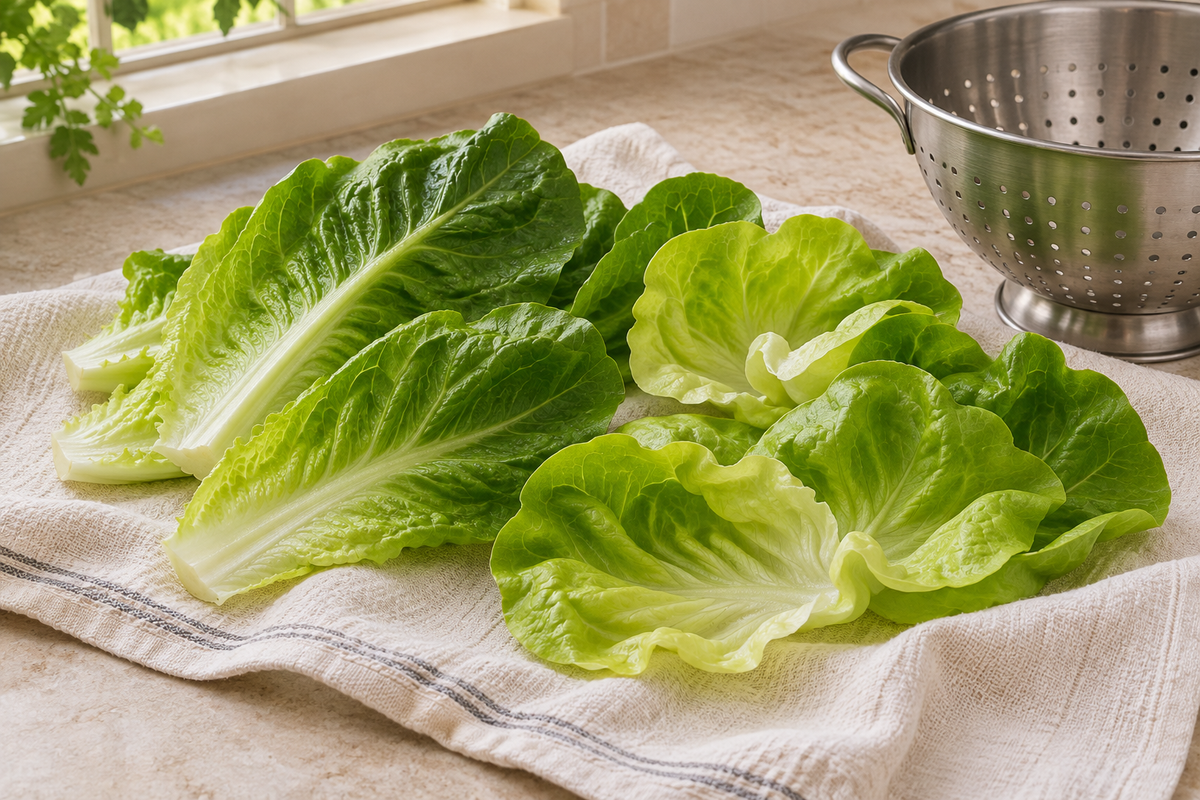
A container of salad greens should make lunch easier, not leave you wondering whether the leaves were washed, when the bag was opened, or why everything at the bottom is wet. Vacuum packaging can help organize lettuce, but choosing a rigid container is only one part of the job.
Can you vacuum seal lettuce? Yes, with equipment and packaging intended for leafy greens, for refrigerated use—not shelf-stable preservation. A rigid container avoids the inward squeeze of a collapsing bag. Remove excess surface water, keep lettuce at 40°F or below, and retain its original dates. Vacuum sealing does not establish a longer safe storage period.
Choose space for the leaves, not the tightest package
Lettuce is bulky for its weight. Pressing a loose handful into a small package saves space by sacrificing the very thing you want to keep: intact leaves. Start with the amount you plan to use soon, then choose packaging that fits without stuffing or folding the leaves under a lid.
A rigid glass container does not collapse around the lettuce as air leaves. That makes it a practical choice when avoiding compression matters. It does not make the lettuce sterile or guarantee crispness. A compatible valve bag takes less space, but its film can draw inward against the leaves.
| Your situation | Practical choice | What still matters |
|---|---|---|
| Loose lettuce for upcoming salads | Compatible rigid container, loosely filled | Drain excess water; keep leaves clear of the lid and valve. |
| Little refrigerator space | Compatible valve bag, if its instructions permit leafy greens | Gentler suction can still compress leaves; do not overfill. |
| Unopened ready-to-eat salad bag | Keep the original package when practical | Follow its storage instructions; there is no need to repackage just to use a sealer. |
| Salad with dressing and toppings | Store components separately when preparing ahead | Wet ingredients change the texture and handling requirements. |
Comparing equipment systems? Explore FRESKO vacuum sealers. A handheld valve system and a countertop heat sealer use different packaging; do not assume bags are interchangeable.
Handle washing and surface moisture separately
Start with clean hands, utensils, and a clean work surface, away from raw meat and its juices. For unwashed lettuce, remove damaged areas, rinse under running water, and dry gently with a clean towel or paper towel. Do not use soap or detergent on produce. Washing reduces contamination but does not eliminate every bacterium.
If the package says “pre-washed” or “ready-to-eat,” you do not need to wash the lettuce again. Follow the label instead of automatically adding another rinse. These recommendations come from the FDA’s produce-handling guidance.
For packing, aim for leaves without obvious droplets or a puddle underneath—not leaves dried out until limp. Drain gently and inspect the bottom of the container before closing it. Keep pieces of lettuce and moisture away from the sealing surfaces and suction valve. The pump removes air; it is not a substitute for draining wet greens.
How to vacuum seal lettuce with HV9
These steps follow the HV9 US manual and the official HV9 Quick Start Guide. Follow the directions supplied with your accessories. The distinction is the package: HV9 specifies FIRM for glass containers and SOFT for delicate leafy greens in its vacuum bags.
Using an HV9 glass container
- Check the container and lid. Start clean. Remove food debris from the gasket and valve area; do not use damaged components.
- Add the prepared lettuce loosely. Do not force leaves under the lid or pack them into the valve area. Close the lid securely.
- Position HV9 over the valve. Seat the suction nozzle squarely so it makes contact.
- Select FIRM. The manual specifies this mode for glass containers. Let the automatic cycle finish; do not substitute SOFT simply because lettuce is delicate.
- Record the packing date and refrigerate promptly. Keep the earlier purchase or opening information separately. Use the lid’s release valve before opening the container again.
Using a compatible HV9 valve bag
Keep the lettuce below the bag’s maximum fill line. Close the entire zipper using the sealing clip, lay the bag flat with its valve facing up, and keep food from blocking the valve. Position the pump and select SOFT, which the manual identifies for leafy greens. The unit stops automatically; any button can stop an operation.
Watch the leaves rather than trying to achieve the tightest-looking bag. If they are being compressed, stop and reconsider the package. SOFT is gentler vacuum control, not a promise that delicate lettuce cannot be crushed. For repeated problems, consult FRESKO product support rather than improvising with an incompatible lid or valve.
Use the date dial without resetting the lettuce’s history

Set the lid marker to the vacuum-packing date as instructed. Then keep a separate label with the original opening date and any relevant package directions. Lettuce opened Monday and repacked Wednesday was still opened Monday.
If you open the container for lunch and seal the remainder again, retain that original information. Do not combine older greens with a new batch if it would make their history unclear. A visible date is useful only when everybody in the kitchen understands what it means.
How long does vacuum-sealed lettuce last?
There is no verified universal number of extra days to add for this home HV9 workflow. Starting quality, handling, package instructions, and refrigerator temperature all matter. Plan near-term meals and follow the lettuce’s original storage directions instead of treating vacuum packaging as permission for extended storage.
Keep lettuce at 40°F or below, checked with a refrigerator thermometer. Utah State University Extension explains that vacuum packaging is not preservation by itself; removing oxygen can favor botulism bacteria, and foods needing refrigeration still need it. A rigid container does not remove that reduced-oxygen concern.
Discard spoiled lettuce, and do not reseal food with an uncertain temperature history to “save” it. Appearance, smell, and a tight seal cannot establish safety. Keep recalled lettuce out of your meals even if it looks normal; vacuum sealing cannot make a recalled product safe.
Questions about vacuum-sealed salad
Should I vacuum seal a fully dressed salad?
For advance preparation, keep greens, dressing, and toppings separate. The goal is manageable portions and fewer soggy leaves—not a new storage allowance for a mixed meal.
Can I freeze lettuce after vacuum sealing?
Not if you expect crisp salad leaves afterward. The National Center for Home Food Preservation lists lettuce among foods that become limp and waterlogged after thawing. Removing air does not prevent that texture change.
Does the date dial tell me when lettuce expires?
No. It records the vacuum-packing date. Keep the original label information and opening date, and do not restart the clock after each use.
Do I need vacuum packaging for every salad?
No. An intact commercial package or ordinary refrigerated storage following the food’s directions may already suit your routine. Choose HV9 when its compatible containers, portion sizes, and date tracking solve a real organizing problem.
Image note: The opening food illustration was AI-generated. Product and accessory images are official FRESKO images. This is a source-based storage guide, not a report of shelf-life testing.
Partager:
Immersion Blender vs. Hand Mixer: Choose by Kitchen Task