

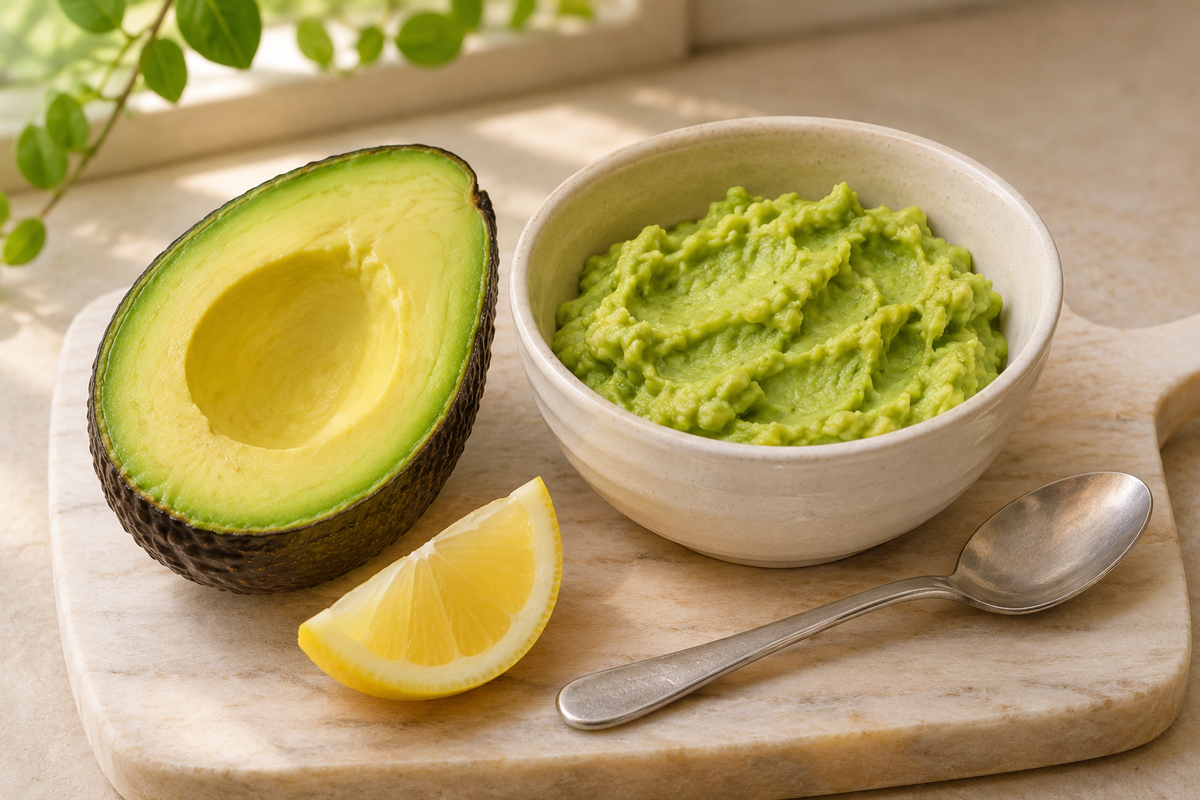
Yes, you can vacuum seal avocado for the freezer, but choose the package by what you want to eat later. For neat slices at lunch, cover and refrigerate a fresh half. For a spread, freeze purée. A freezer-rated vacuum bag can hold a peeled half, but neither suction nor lemon juice guarantees green flesh, firm slices, or extra safe storage time.
The half left over from breakfast has two possible futures: fanned across a sandwich or stirred into a dressing. Decide which one you want before you reach for a bag. A vacuum can limit air around the cut surface. It can't put the texture back once a ripe avocado has been squeezed or frozen.
Jump to: Half or purée? · Pack a half · Freeze purée · HV9 bags, containers, and date dial · Browning vs. safety
Choose a package for the next meal
| What you want later | What to do now | The trade-off |
|---|---|---|
| Even slices for a sandwich or salad | Leave the half intact, cover its cut face, and refrigerate promptly in a rigid container. No pump needed. | The walls protect the fruit from pressure; a box alone doesn't cover the exposed flesh. |
| A half to mash after freezing | Peel and pit the half, treat the surface with lemon juice, and vacuum pack in a compatible freezer bag. Freeze flat right away. | A soft half can flatten in the bag. Expect softer flesh when thawed. |
| Avocado for dressing, a dip, or a smoothie | Purée, portion, and freeze in a freezer-rated container with room for expansion. | You give up slices, but you won't need to rescue soft pieces at serving time. |
How to pack an avocado half without flattening it
Start with a ripe avocado that gives slightly under gentle pressure. Rinse the skin under running water before cutting, even though you won't eat the peel. Dry it on a clean towel, then use a clean knife and board. A knife passes through the skin on its way to the flesh; washing after the cut misses that opportunity. The FDA's guide to preparing produce advises against washing fruit with soap.
For the refrigerator: Keep the skin on if it helps the half hold its shape. A little lemon juice on the cut face and food wrap pressed against the surface can limit darkening. Place the half in a container deep enough that the lid doesn't press on it, then refrigerate. This is the option to choose when you actually want slices. There's little point in flattening today's ripe avocado to save space for tomorrow's sandwich.
For the freezer: The California Avocado Commission's method for freezing halves calls for peeling and pitting the fruit, dipping the half in lemon juice, vacuum packing it in a freezer bag, and freezing it flat. Let excess juice drip away first. Put the half in a single layer away from the valve and zipper. If it already folds under its own weight, skip the bag and mash it. A snug seal is not a reason to keep compressing fruit.
For a freezer batch, make purée the default
The National Center for Home Food Preservation's avocado guidance favors purée for quality. That's useful even if you usually buy avocados for salads: reserve the firmest ripe one for slicing and turn the softer ones into a sandwich spread or the base for lime dressing.
- Prepare the flesh. Wash the whole avocados, then peel, remove the pits, and mash the flesh until it suits the next dish. Use sound fruit, not fruit showing mold or decay.
- Treat for color if desired. The center suggests one tablespoon of lemon juice for every two avocados as a quality treatment. Stir it through the purée so it's not sitting in a puddle on top. It adds tartness, so taste your finished dressing before adding more citrus.
- Portion for one use. A small tub for toast and a larger one for dip are more useful than a single block that has to thaw all at once. Spoon the purée into clean freezer-rated containers. Leave the prescribed expansion space and wipe the rim before closing.
- Label and freeze right away. Write the contents, portion, and prep date on the package. Keep the freezer at 0°F or below. Thaw what you need in the refrigerator, not on the counter. Stir the thawed purée before deciding whether it needs any extra liquid.
Using the HV9: choose the package before the button
A bag fits around its contents; a rigid glass container holds its own shape. That's the useful difference between the two formats in the FRESKO HV9 handheld vacuum sealer set. A freezer-bound half with no loose juice may suit a valve bag. A spoonable purée that could travel toward a bag valve is a better candidate for a rigid container. For freezing, check the freezer-use markings on your specific container and lid. If you can't confirm both, use an ordinary freezer-rated tub instead.

Valve bag: Use the supplied sealing clip to close the zipper across its full width. Keep the valve facing up, clear of fruit and liquid. The HV9's SOFT setting is its gentler bag mode for delicate foods, not a promise that a ripe half won't dent. Stop if juice approaches the valve or the flesh starts to collapse. Don't switch to stronger suction to chase the last small pocket of air.
Glass container: Keep the rim, gasket, and valve clean and the food below the lid. For a vacuum cycle on the compatible HV9 glass container, close the lid, seat the pump over the valve, and use FIRM as shown in the HV9 Quick Start Guide. The setting follows the container, even when the contents are soft. Slide the date markers to the packing date. Keep the original prep date on a label if you repack; a fresh seal doesn't start a new clock.
Why green isn't a safety test
Air reaching the cut flesh contributes to browning. Lemon juice and close contact with a covering can slow the color change. A pit shields only the patch it touches. None of these tells you how cold the avocado stayed or whether the knife and board were clean. Likewise, a brown edge is a color change, not a measurement of the whole portion's safety.
Follow the FDA's cold-storage guidance: keep the refrigerator at 40°F or below and put perishables away within two hours, or one hour above 90°F. If your cut avocado sat beyond that limit, discard it even if it's still green. Don't try to rescue it with lemon juice, freezing, or another vacuum cycle.
Does vacuum-packed avocado last longer in the fridge? Don't count on extra days. Home vacuum packaging isn't a preservation process on its own, as Utah State University Extension explains. For a fresh half, cover it, refrigerate it, and plan a near-term use. For surplus ripe fruit, freeze portions while they're still in good condition. A store-bought sealed pouch has its own processing and instructions; its date doesn't apply to a bag packed at home.
If your freezer holds mostly neat, stackable portions, consider which bags your equipment accepts. If you usually put aside a spoonful of dressing or a very soft half, access to rigid containers may matter more. Compare FRESKO vacuum sealers by the packaging you'll actually use, rather than by suction strength alone.
Image note: The food-only cover illustration was AI-generated. The HV9 product image is supplied by FRESKO.
Partager:
Vacuum Sealing Fruit: Soft Berries, Firm Fruit and Freezer Prep