

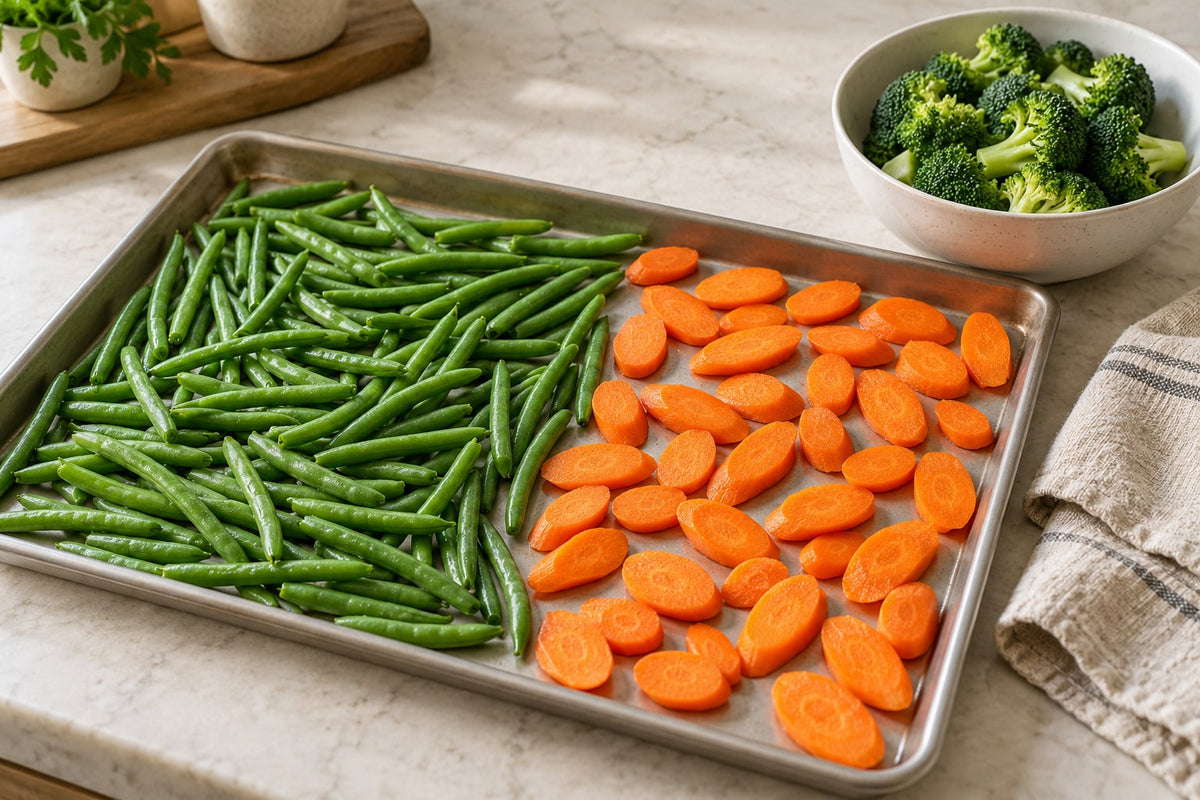
Quick answer: Choose vacuum seal bags for vegetables that are rated for freezing and compatible with your machine. Match the bag to a meal-size portion, then follow the vegetable's blanching directions, cool and drain thoroughly, and freeze pieces before sealing. Keep the finished packages frozen; removing air does not make vegetables shelf-stable.
A bag of green beans for Tuesday dinner needs a different amount of space than broccoli for a family casserole. Start with what you will cook, not the biggest bag in the drawer. A good freezer routine combines the right packaging with the right preparation; neither can make up for skipping the other.
Choose the bag for the portion
Look for food-contact packaging specifically intended for freezing, with the durability and moisture protection that freezer storage requires. The National Center for Home Food Preservation's packaging guidance also emphasizes materials that seal well and do not become brittle at low temperatures. A thin produce bag is not an equivalent substitute.
Next, check the machine's packaging requirements. A bag intended for an external heat-sealing machine and a zipper bag with a vacuum valve are different systems. Confirm the bag type and usable width before buying; our bag-and-machine compatibility guide covers that decision in detail.
| Your freezer portion | Format to consider | What to check |
|---|---|---|
| Similar amounts of beans or sliced carrots each week | Precut heat-seal bags | The portion fits without stretching the bag or crowding the sealing area. |
| Portions that vary in length or volume | Cut-to-length vacuum rolls | The roll width fits the machine; leave material for both end seals. |
| Bulky broccoli florets | A roomy compatible bag, packed in a shallow layer | Florets do not press sharply against the film, and the mouth lies flat. |
| Vegetable puree or soup | Freeze portions solid in a suitable container before transferring to a compatible bag | No loose liquid can be drawn toward the pump; follow the machine instructions. |
For repeat portions, FRESKO precut vacuum sealer bags come in 6 × 10-inch and 8 × 12-inch options. Those dimensions are a starting point, not a guaranteed cup capacity: vegetable shape, thickness, seams, and the machine's required clearance all affect usable room.
Prepare the vegetable before you prepare the seal
Vacuum sealing limits contact with air; it does not replace blanching. Most vegetables need this short heat treatment before freezing to slow enzyme activity that affects flavor, color, and texture. Follow the specific vegetable and cut-size instructions, rather than applying one timer to everything.
These examples use water blanching. Follow the linked preparation instructions for each vegetable. Start timing when the water returns to a boil, then cool promptly and drain thoroughly. NCHFP explains why accurate blanching and prompt cooling matter.
| Vegetable and preparation | Water-blanch time | Before packing |
|---|---|---|
| Green, snap, or wax beans, trimmed and cut into 2–4-inch lengths | 3 minutes | Cool promptly and drain. |
| Broccoli, prepared as directed, with florets no more than 1½ inches across | 3 minutes | Cool promptly and drain; do not use this timing for oversized pieces. |
| Carrots, peeled and cut into thin slices, ¼-inch cubes, or lengthwise strips | 2 minutes | Cool promptly and drain. Small whole carrots require a different time. |
| Bell or sweet peppers, washed, seeded, and cut into ½-inch strips or rings | 2 minutes for the heated preparation | Cool promptly and drain. NCHFP also provides an unheated freezing option. |
Choose vegetables with their eventual meal in mind. Frozen broccoli can work in cooked dishes, but a vacuum bag will not preserve the fresh crunch of a cucumber salad. NCHFP lists lettuce and cucumbers for raw salads among foods that freeze poorly.
A six-step freezer workflow
- Sort, wash, and plan portions. Start with sound produce. Trim and cut it according to the vegetable-specific directions. Decide how much one meal needs before filling any bags.
- Blanch as directed. Work in manageable batches and keep different vegetables separate when their preparation or timing differs. Blanching is a quality-preserving step, not a process that makes the food shelf-stable.
- Cool quickly, then drain. Transfer the vegetables promptly to cold or ice water as directed. Drain well and remove clinging surface water with a clean towel. Do not seal warm, dripping vegetables.
- Tray-freeze the pieces. Spread the prepared vegetables in a shallow layer and freeze until firm. University of Minnesota Extension describes tray packing as a way to keep pieces separate for easier portioning.
- Fill and seal the compatible bag. Work with small batches so the remaining vegetables stay frozen. Keep crumbs and moisture off the sealing area, avoid overfilling, and leave the opening clearance required by your machine. With rolls, make and inspect the first end seal before filling.
- Inspect, label, and return to the freezer. Look for a continuous seam without trapped food or wrinkles. Record the vegetable, preparation, portion amount, and freezing date. Store at 0°F (-18°C) or below, allowing room for air circulation during freezing.
Labeling matters when several green packages look alike. “Broccoli, blanched, two dinner portions” is more useful than a date alone. NCHFP recommends recording the food, amount, preparation form, packaging date, and added ingredients. Use older packages first instead of treating a new seal as a new starting date.
If the bag does not stay tight
Check the seam first. Moisture, food particles, and folds can interrupt it. If the vegetables have remained properly frozen, transfer them to a sound bag with a clean sealing area. An overstuffed bag may need a smaller portion, not another vacuum cycle.
Reposition sharp frozen edges rather than pressing them harder against the film. No bag should be treated as puncture-proof. If a package swells or its temperature history is uncertain, do not simply reseal it and assume the food is safe.
Utah State University cautions that vacuum packaging is not a preservation method by itself. This workflow is for frozen storage—not pantry storage or an extended refrigerator life. A tight bag cannot establish that food has been handled safely.
Questions before you fill the next bag
Can I vacuum seal vegetables without blanching?
Not as a blanket shortcut. Most vegetables need blanching before freezing. Some, including bell peppers, have specific unheated freezing directions. Follow a reliable vegetable-specific guide and your equipment instructions; an exception for freezing is not permission for prolonged refrigerated vacuum storage.
Should I buy the largest vacuum bags for vegetables?
Usually, buy around the portions you will actually use. A roomy bag can accommodate bulky florets, but filling one enormous package may make everyday cooking less convenient. Fit the prepared food without stretching the film and preserve the machine's required sealing space.
Can I cook vegetables inside the same bag?
Freezer suitability alone does not establish cooking suitability. Check the exact bag's temperature limits and the permitted heating method before using it for simmering, microwaving, or sous vide. If those details are unclear, remove the vegetables and cook them in suitable cookware.
Already own a compatible sealer? Browse FRESKO vacuum sealer bags by format, then match the portion and preparation to your next meal. The useful upgrade is a freezer you can cook from, not simply a tighter-looking package.
Image note: The cover is an AI-generated editorial illustration. Product images are official FRESKO images.
Partager:
How to Vacuum Seal Cheese: Match the Package to the Cheese