

Quick answer: Choose an immersion blender for pureeing soup, smoothing sauces, and blending liquid-forward mixtures. Choose a hand mixer for creaming butter, mixing suitable batters, and aerating baking mixtures. An immersion blender with a whisk attachment can handle light whipping, but it does not become a full substitute for a hand mixer.
Two handheld appliances, one crowded kitchen drawer. The useful question in an immersion blender vs hand mixer comparison is not which one does more. It is whether your next recipe needs ingredients cut smaller, mixed together, or filled with air. Those are different jobs, even when the finished food looks smooth.
Immersion blender vs hand mixer: quick task choice
Start with the result you want. This is a practical selection guide, not a performance ranking or a side-by-side appliance test. A particular attachment's instructions take priority over a general category recommendation.
| Your task | Better starting point | What to check |
|---|---|---|
| Turn cooked vegetables and broth into smooth soup | Immersion blending arm | Food temperature, blade coverage, and permitted container |
| Blend a dressing or smooth a liquid sauce | Immersion blending arm | A vessel that keeps the ingredients around the blade |
| Whip cream or egg whites | Whisk attachment or appropriately equipped hand mixer | Batch limits and the recipe's desired peaks |
| Cream softened butter and sugar | Hand mixer with suitable beaters | The recipe and the mixer's permitted load |
| Mix cake batter or frosting | Hand mixer when the recipe calls for one | Attachment, mixing sequence, and stopping point |
| Work a heavy dough | A mixer explicitly rated for that dough | Approved attachment and quantity; not the H9 whisk or blade |
A blade cuts and purees; mixer beaters combine ingredients without acting as chopping blades. KitchenAid's hand-mixer comparison makes that distinction and identifies creaming butter and sugar as a mixer job. The overlap is mixing some fluid ingredients—not identical performance across every recipe.
The attachment matters more than the handle
Blending arm: make the ingredients smaller
Think of the arm as a tool for changing what is in the bowl. A piece of cooked carrot becomes part of the soup. Soft fruit blends into the surrounding liquid. If the goal is a puree, a mixer is not doing the same work: its beaters can move the pieces around without making them disappear.
New to the equipment? Our guide to what an immersion blender does covers the basic parts and uses. Here, the decision is narrower: whether a blade or a mixing attachment fits the next step in your recipe.
Beaters: combine without turning everything into a puree
When a baking recipe says to cream, beat, or mix, pay attention to both the tool and the stage. You may want a fluffy butter mixture now, then gentler mixing after adding flour. Replacing the beaters with a fast blade changes the action, not just the appliance you hold.
That is why “it fits in the bowl” is not enough. Keep a spatula handy for the parts a recipe asks you to fold by hand. There is no need to make an electric tool responsible for every step.
H9 whisk: useful overlap, with a clear boundary
The H9's separate whisk is intended for light mixtures, including whipping cream and egg whites. Its US manual excludes heavy, dense mixtures such as thick biscuit dough or bread dough. Use the whisk when you want aeration; do not treat it as a dough attachment. These permissions come from the H9 US instructions, pages 2–5.
Can you use an immersion blender instead of a hand mixer?
Sometimes—but choose by attachment and recipe, not convenience alone. With the H9 whisk, light whipping is a documented use. With the blending arm, liquid-forward blending is the relevant job. Neither statement means that any cake, cookie, or bread recipe can be transferred to that attachment unchanged.
Try this three-question check before swapping tools:
- What should change? Do you want smaller pieces, a more uniform mixture, or more air?
- What should stay intact? If you want pieces of fruit or chocolate to remain, cutting them with a blade defeats the goal.
- Does the manual permit the mixture? A low speed does not make an unsuitable dense load safe for a light whisk.
The reverse substitution has the same limit. A hand mixer may combine ingredients, but it is not the right replacement for a blade when soup still contains vegetable chunks. Breville's appliance comparison likewise separates direct blending from the mixing and aerating work of beaters.
For cream, stop and look at the texture instead of copying a fixed number of seconds from someone else's kitchen. Ingredient amount, temperature, vessel, and attachment can differ. Select the soft or firmer peaks your recipe requests rather than treating maximum speed as the destination.
Batch size, containers, and cleanup can decide the purchase
Picture the amount you actually cook. A quick sauce for two and dessert for a crowd are different assignments. For blending, the ingredients need to reach the working end. For whisking, allow room for the mixture to expand and for controlled movement. A wide, shallow bowl is not automatically suitable for a small quantity; a tiny cup is not automatically suitable for two beaters.
Keep appliance limits separate from bowl capacity. For the H9, the manual sets a maximum of one minute per operating cycle and at least one minute of cooling between cycles. It also prohibits processing food above approximately 176°F (80°C). A larger pot does not cancel those limits. Follow the instructions supplied with your unit.
Both choices add more than a motor to the drawer. Count the attachments and containers you will use, dry, and store. Unplug before changing accessories or cleaning, and do not immerse the motor. Detachable parts do not share one universal dishwasher rule; check each part's care instructions.
Which one belongs in your kitchen?
Choose an immersion blender first if your recurring frustration is transferring soup, smoothing sauces, or blending small wet mixtures. Choose a hand mixer first if you regularly bake recipes that depend on beaters. If you do both, the appliances can complement one another; replacing a useful mixer is not a requirement for adding a hand blender.
Before buying, write down your three most frequent recipes and the action each needs. “Soup, dressing, cream” points toward blending plus a whisk. “Cookies, frosting, cake” points toward a mixer. That short list is more useful than a promise that one appliance can do everything.
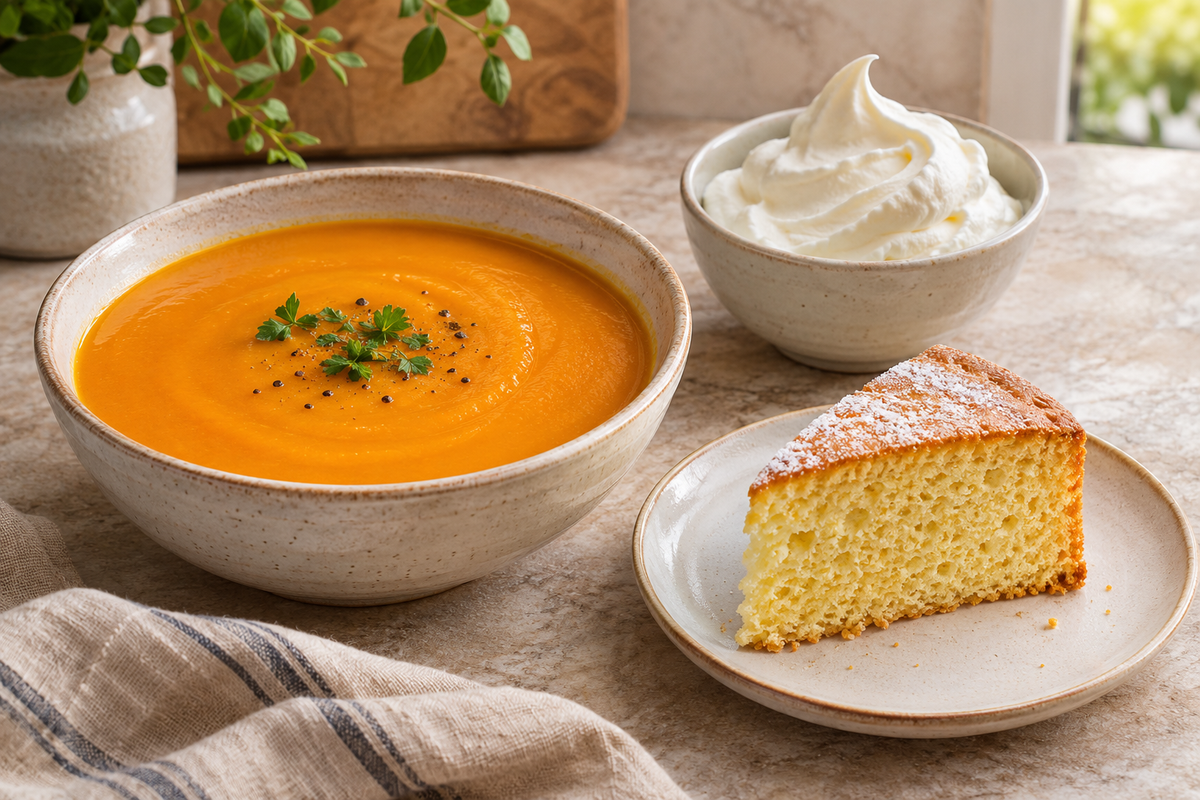
Editorial note: This guide uses manufacturer documentation, not a side-by-side product test. The food-only hero illustration is AI-generated; the H9 product photograph is supplied by FRESKO.
Share:
Immersion Blender Pesto: Small-Batch Texture with the Right Attachment