

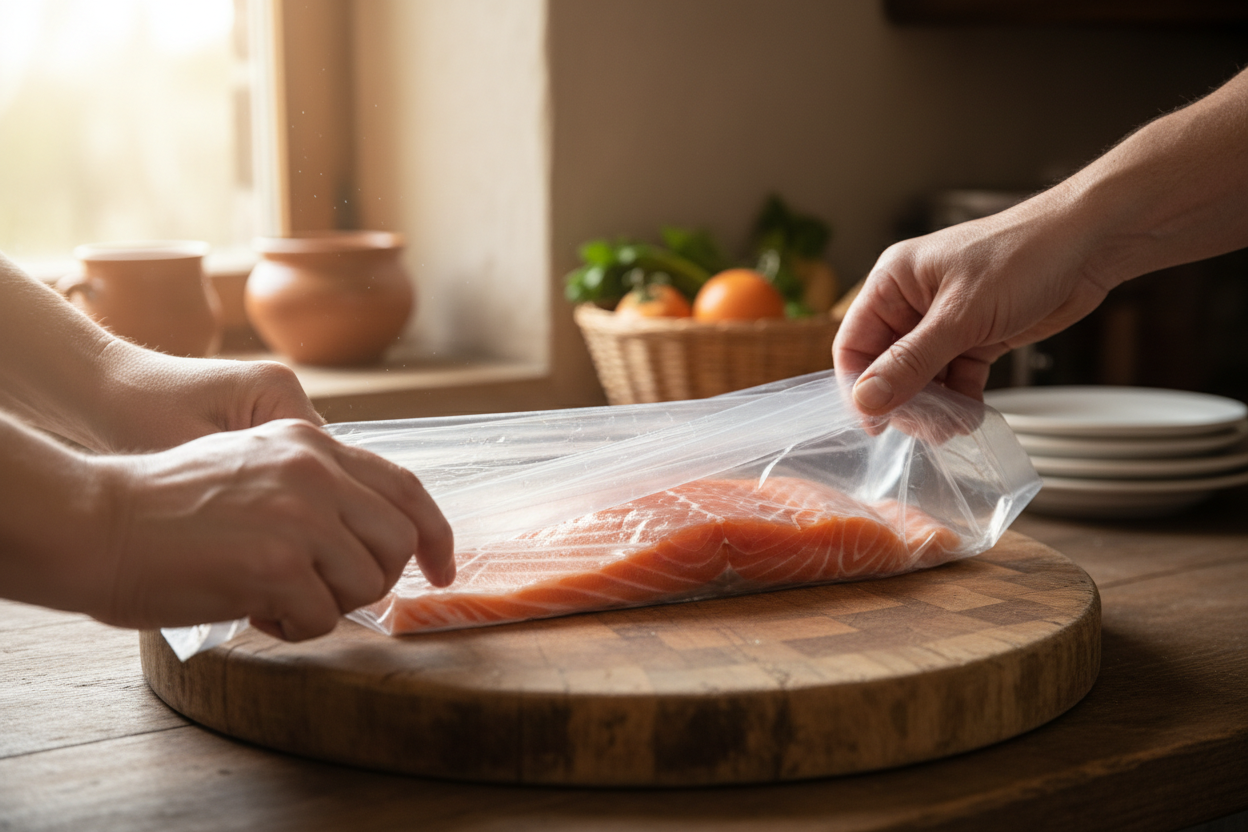

Une machine sous vide peut prolonger la durée de vie de presque tout ce qui se trouve dans votre réfrigérateur ou votre congélateur, mais le coût initial en vaut-il la peine ?
La question que tout le monde se pose avant d'acheter
Vous avez probablement vu des machines sous vide chez un ami, regardé une vidéo YouTube sur la préparation des repas ou en avez trouvé une chez Costco. Et puis vous vous êtes demandé : est-ce que cet appareil va réellement me faire économiser de l'argent, ou est-ce juste un autre gadget qui prend la poussière ? Bonne question. Faisons le calcul, et soyons honnêtes à ce sujet.
La réponse courte est oui, pour la plupart des foyers, une machine sous vide est rentabilisée en quelques mois. Mais la réponse longue dépend de la façon dont vous faites vos courses, de ce que vous mangez et de la fréquence à laquelle vous l'utiliserez. Ce guide décortique tout cela pour que vous puissiez décider sans le battage marketing.
Verdict rapide
|
Votre situation |
Ça vaut le coup ? |
Pourquoi |
|
Vous achetez de la viande, du fromage ou des produits en vrac |
✅ Oui |
Les aliments durent 3 à 5 fois plus longtemps ; retour sur investissement en quelques semaines |
|
Vous chassez, pêchez ou jardinez |
✅ Absolument |
Essentiel pour la conservation de grandes quantités |
|
Vous préparez vos repas chaque semaine |
✅ Oui |
Réduit le temps de préparation et le gaspillage |
|
Vous vivez seul(e), cuisinez rarement |
⚠️ Peut-être |
Moins de nourriture = retour sur investissement plus lent |
|
Vous mangez principalement à l'extérieur |
❌ Probablement pas |
Pas assez de nourriture à la maison pour compenser le coût |
Combien coûte réellement une machine sous vide ?
Il y a trois facteurs à prendre en compte : la machine elle-même, les sacs et votre temps.
La machine
Les modèles d'entrée de gamme coûtent entre 30 et 60 $ et conviennent pour une utilisation occasionnelle. Les unités de milieu de gamme (80 à 150 $) gèrent beaucoup mieux les coupes plus épaisses, les aliments humides et une utilisation quotidienne. Les modèles haut de gamme ou commerciaux dépassent les 200 $, mais sont excessifs pour la plupart des cuisines domestiques.
Conseil de pro : Ne prenez pas le modèle le moins cher si vous prévoyez de sceller de la viande crue ou des liquides. Les moteurs sous-alimentés ont du mal et ont tendance à tomber en panne rapidement.
Les sacs
C'est là que se trouvent les coûts permanents. Les sacs génériques coûtent en moyenne entre 0,15 et 0,30 $ chacun. Les sacs ou rouleaux de marque peuvent coûter entre 0,40 et 0,80 $ ou plus. Si vous emballez sous vide 5 à 10 articles par semaine, cela représente 5 à 15 $/mois en sacs, ce qui est tout à fait gérable.
Il existe également des sacs et des contenants sous vide réutilisables, ce qui réduit considérablement vos coûts de consommables à long terme. Certains utilisateurs réduisent leurs coûts de sacs de 80 % en passant à des options réutilisables après les premiers mois.
D'où viennent les véritables économies

1. Réduction spectaculaire du gaspillage alimentaire
L'USDA estime que le ménage américain moyen jette environ 1 500 dollars de nourriture par an. Même si une machine sous vide vous aide à récupérer 20 % de cela, vous économisez 300 dollars par an rien qu'en évitant le gaspillage alimentaire.
Voici pourquoi cela fonctionne : l'emballage sous vide élimine l'oxygène, qui est le principal facteur de détérioration, de brûlure de congélation et de dégradation de la saveur. La viande qui dure 6 mois dans un sac de congélation standard peut durer 2 à 3 ans lorsqu'elle est emballée sous vide.
|
Aliment |
Réfrigérateur (sans scellage) |
Réfrigérateur (sous vide) |
Congélateur (sous vide) |
|
Poitrine de poulet |
1 à 2 jours |
Jusqu'à 2 semaines |
2 à 3 ans |
|
Fromage à pâte dure |
1 à 2 semaines |
4 à 8 mois |
S.O. |
|
Baies fraîches |
3 à 5 jours |
1 à 2 semaines |
12 à 18 mois |
|
Restes cuits |
3 à 4 jours |
Jusqu'à 2 semaines |
3 ans et plus |
|
Grains de café |
2 à 4 semaines |
3 à 6 mois |
S.O. |
2. Acheter en vrac sans gaspiller
L'achat en gros chez Costco, Sam's Club ou un entrepôt local est l'un des moyens les plus rapides de réduire votre facture d'épicerie – mais seulement si vous pouvez réellement tout utiliser avant que cela ne se gâte. Une machine sous vide supprime complètement cette contrainte.
Achetez un paquet de 5 kg de bœuf haché, portionnez-le en repas, mettez sous vide et congelez. Vous venez d'acheter du bœuf à 17,60 $/kg au lieu de 26,40 $/kg du rayon ordinaire, et rien n'est gaspillé.
3. Efficacité de la cuisson sous vide et de la préparation des repas
Si vous avez été curieux de la cuisson sous vide, une machine sous vide est essentiellement requise. Scellez votre protéine avec des herbes et du beurre, plongez-la dans un bain-marie et obtenez des résultats de qualité restaurant à la maison. Les sacs scellés s'empilent également proprement dans le congélateur, transformant votre congélateur en un service de kits de repas personnels.
4. Utilisations non alimentaires qui ajoutent de la valeur
Une bonne machine sous vide mérite sa place sur le comptoir au-delà des courses :
• Préservez les documents, photos et appareils électroniques de l'humidité
• Rangez les vêtements saisonniers et gagnez de la place dans le placard
• Protégez les médicaments ou les trousses de premiers secours de l'humidité
• Faites mariner la viande en quelques minutes au lieu de quelques heures (sceller et agiter)
Analyse chiffrée : un exemple de ménage réel

|
Catégorie |
Sans machine sous vide |
Avec machine sous vide |
Économies annuelles |
|
Gaspillage alimentaire (péremption) |
~800 $/an |
~300 $/an |
500 $ |
|
Viande (prix en gros vs régulier) |
1 800 $/an |
1 350 $/an |
450 $ |
|
Gain de temps pour la préparation des repas |
— |
~3 h/mois |
Non-monétaire |
|
Coût des sacs (mensuel ~8 $) |
— |
-96 $/an |
-96 $ |
|
Économies annuelles nettes |
— |
— |
~854 $ |
Avec une machine sous vide de milieu de gamme à 120 $ et 96 $ de sacs pour l'année, votre coût total la première année est de 216 $. Vos économies estimées : 854 $. C'est un retour sur investissement d'environ 3 mois – et chaque année suivante est presque entièrement constituée d'économies pures.
Ce qu'il faut rechercher dans la meilleure machine sous vide

Toutes les machines sous vide ne sont pas conçues de la même manière, et la mauvaise machine vous frustrera au point de ne plus l'utiliser. Voici ce qui compte réellement :
Puissance d'aspiration (kPa)
Plus le kPa est élevé, plus l'aspiration est forte. Pour la viande crue, le poisson et les aliments humides, vous voulez au moins 20 kPa et plus. Les unités bon marché plafonnent souvent autour de 10-15 kPa et ont du mal avec tout ce qui est humide.
Mode Humide/Sec
Vous scellez une poitrine de poulet marinée ou un sachet de soupe ? Vous avez besoin d'un modèle avec un mode dédié aux aliments humides, sinon le liquide est aspiré dans le moteur et le tue.
Stockage des rouleaux et coupe intégrée
Acheter des rouleaux de scellage sous vide (plutôt que des sacs pré-faits) réduit considérablement votre coût par utilisation. Une machine avec stockage de rouleaux intégré et un coupeur rend cela facile au lieu d'être ennuyeux.
Compatibilité des sacs
Certaines machines ne fonctionnent qu'avec leurs sacs propriétaires (un classique "rasoir et lames"). Assurez-vous que votre machine est compatible avec des sacs tiers, sinon vous paierez une prime pour toujours.
Une machine sous vide est-elle faite pour vous ?

C'est un excellent investissement si vous...
• Faites vos achats dans des magasins-entrepôts (Costco, Sam's Club, BJ's)
• Achetez de la viande en paquets familiaux ou chez un boucher
• Chassez, pêchez ou avez un jardin potager
• Préparez vos repas ou cuisinez en grande quantité le week-end
• Détestez jeter les restes ou les produits abîmés
• Voyagez fréquemment et voulez de la nourriture prête à votre retour
Vous pourriez vouloir attendre si vous...
• Cuisinez rarement à la maison (moins de 2 fois par semaine)
• Avez un espace de congélation très limité
• Achetez principalement des articles pré-portionnés, à usage unique
Même dans la catégorie « peut-être », beaucoup de gens découvrent qu'ils changent leurs habitudes après en avoir acheté une – la machine sous vide rend l'achat en gros et la préparation des repas si faciles que cuisiner à la maison devient la norme.
Une machine sous vide est-elle faite pour vous ?
C'est un excellent investissement si vous...
• Faites vos courses dans des magasins-entrepôts (Costco, Sam's Club, BJ's)
• Achetez de la viande en paquets familiaux ou chez un boucher
• Chassez, pêchez ou avez un jardin potager
• Préparez vos repas ou cuisinez en grande quantité le week-end
• Détestez jeter les restes ou les produits abîmés
• Voyagez fréquemment et voulez de la nourriture prête à votre retour
Vous pourriez vouloir attendre si vous...
• Cuisinez rarement à la maison (moins de 2 fois par semaine)
• Avez un espace de congélation très limité
• Achetez principalement des articles pré-portionnés, à usage unique
Même dans la catégorie « peut-être », beaucoup de gens découvrent qu'ils changent leurs habitudes après en avoir acheté une – la machine sous vide rend l'achat en gros et la préparation des repas si faciles que cuisiner à la maison devient la norme.
Erreurs courantes commises par les gens
Si vous avez acheté une machine sous vide et qu'elle traîne dans un tiroir, l'une de ces raisons en est probablement la cause :
• Acheter le modèle le moins cher. Une unité à 30 $ qui tombe en panne après 6 mois est un gaspillage, pas une bonne affaire.
• Oublier de laisser suffisamment de bord de sac. Il faut au moins 3 pouces au-dessus de l'aliment pour une bonne étanchéité. Trop peu et ça ne se ferme pas correctement.
• Sceller des aliments encore chauds. Laissez d'abord les aliments refroidir à température ambiante ou à température de réfrigérateur, sinon vous aurez de la condensation à l'intérieur du sac.
• Ignorer les options réutilisables. Après la courbe d'apprentissage initiale, les sacs réutilisables peuvent réduire considérablement vos coûts récurrents.
• Ne pas étiqueter les sacs. La viande emballée sous vide a la même apparence après 6 mois. Étiquetez toujours avec la date et le contenu.
Pourquoi les machines sous vide Fresko se distinguent
Pour les utilisateurs qui recherchent une aspiration fiable, une compatibilité avec les aliments humides et une flexibilité des sacs sans payer les prix des machines commerciales, Fresko a été conçu spécifiquement pour ce juste milieu.
Les machines Fresko prennent en charge les modes humide et sec, sont équipées d'un rangement de rouleaux intégré et sont compatibles avec tous les sacs sous vide gaufrés standard, pas seulement les nôtres. Si vous voulez découvrir ce qui distingue Fresko des modèles les plus populaires du marché, consultez notre comparaison complète des meilleures machines sous vide de 2025.
FAQ
Une machine sous vide en vaut-elle la peine pour une personne seule ?
Oui, surtout si vous cuisinez en grande quantité ou achetez en vrac. Les économies sont moindres, mais l'investissement l'est aussi. Un appareil à 60-80 $ peut toujours être rentable si vous êtes assidu à l'emballage sous vide avant la congélation.
Quelle est la meilleure machine sous vide selon les avis des consommateurs et les critiques ?
Les machines les mieux notées excellent constamment dans trois domaines : des scellages fiables dès le premier essai, une forte aspiration pour les aliments humides et une durabilité au-delà de la première année. Les modèles dans la gamme de 100 à 150 $ ont tendance à atteindre ce juste milieu pour la plupart des utilisateurs domestiques.
Les machines sous vide fonctionnent-elles pour les liquides ?
Pas directement – vous ne pouvez pas verser de liquide dans un sac et le sceller. Mais vous pouvez congeler le liquide d'abord, puis sceller sous vide le bloc congelé. Ou utiliser un contenant compatible sous vide pour les articles liquides.
Combien de temps les aliments scellés sous vide durent-ils au congélateur ?
La plupart des viandes durent 2 à 3 ans contre 6 à 12 mois dans un sac standard. Poisson et volaille : 1 à 2 ans. Plats cuisinés : 2 à 3 ans. La variable clé est de savoir si vous avez obtenu un bon scellement hermétique.
Tous les sacs de machine sous vide sont-ils les mêmes ?
Non. Vous avez besoin de sacs gaufrés (texturés/à canaux) pour que les machines sous vide externes fonctionnent correctement. Les sacs lisses ne permettent pas à l'air de s'échapper. Fresko est compatible avec tout sac gaufré standard, y compris les rouleaux en vrac d'Amazon ou des magasins entrepôts.
En résumé
Pour la plupart des foyers qui cuisinent régulièrement, une machine sous vide est l'un des rares gadgets de cuisine qui s'autofinance réellement. Le calcul n'est pas compliqué : si vous jetez plus de 50 $ de nourriture chaque mois (ce que font la plupart des Américains), vous récupérerez une machine à 120 $ en moins de trois mois.
La question n'est pas de savoir s'il faut en acheter une, mais laquelle choisir et si vous prendrez l'habitude de l'utiliser. Commencez simplement, choisissez une machine avec mode humide et sec, procurez-vous un rouleau de sacs et essayez-la pendant 30 jours. La plupart des gens ne reviennent jamais en arrière.
Partager:
Comment utiliser une machine sous vide : guide étape par étape (pour les débutants)
Les meilleures machines sous vide pour la maison en 2026 — Et pourquoi le Prime Day est le moment idéal pour les acheter