

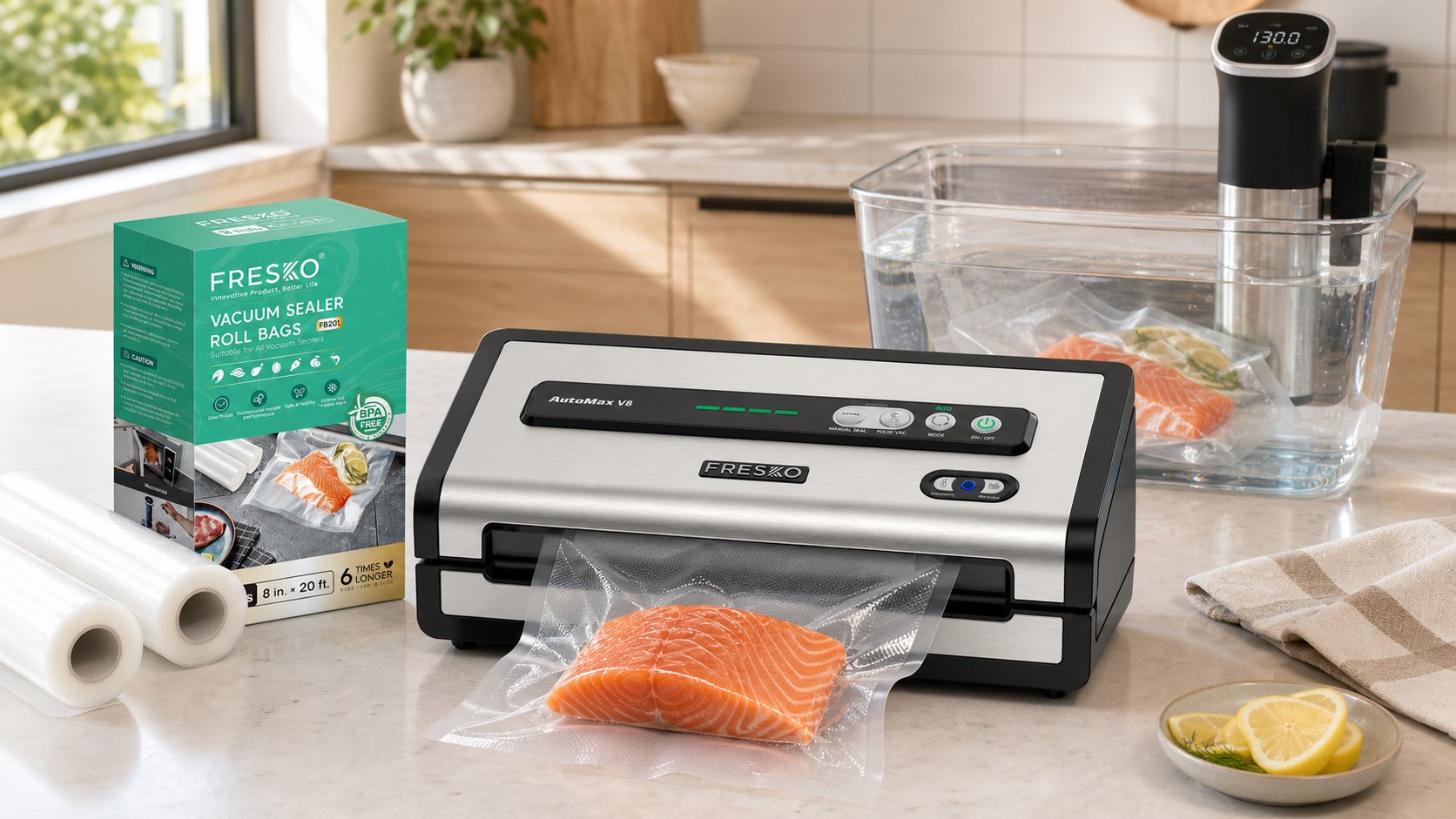
Réponse rapide : Non, vous n'avez pas besoin d'une machine sous vide pour cuisiner sous vide. Pour de nombreux steaks, poitrines de poulet, filets de poisson et autres cuissons relativement courtes, un sac de congélation robuste à fermeture éclair et la méthode de déplacement de l'eau fonctionnent bien. Une machine sous vide devient utile lorsque vous cuisinez souvent, que vous préparez des repas à l'avance à partir du congélateur, que vous réalisez des cuissons longues ou à haute température, ou que vous souhaitez simplement moins de sacs flottants et des scellages plus fiables.
En d'autres termes, un scelleur est une amélioration – pas un droit d'entrée. Ce qui compte le plus, c'est que vos aliments restent dans un emballage alimentaire sûr et résistant à la chaleur, avec très peu d'air emprisonné et un contact constant avec le bain-marie. Voici comment choisir la bonne méthode pour votre façon de cuisiner.
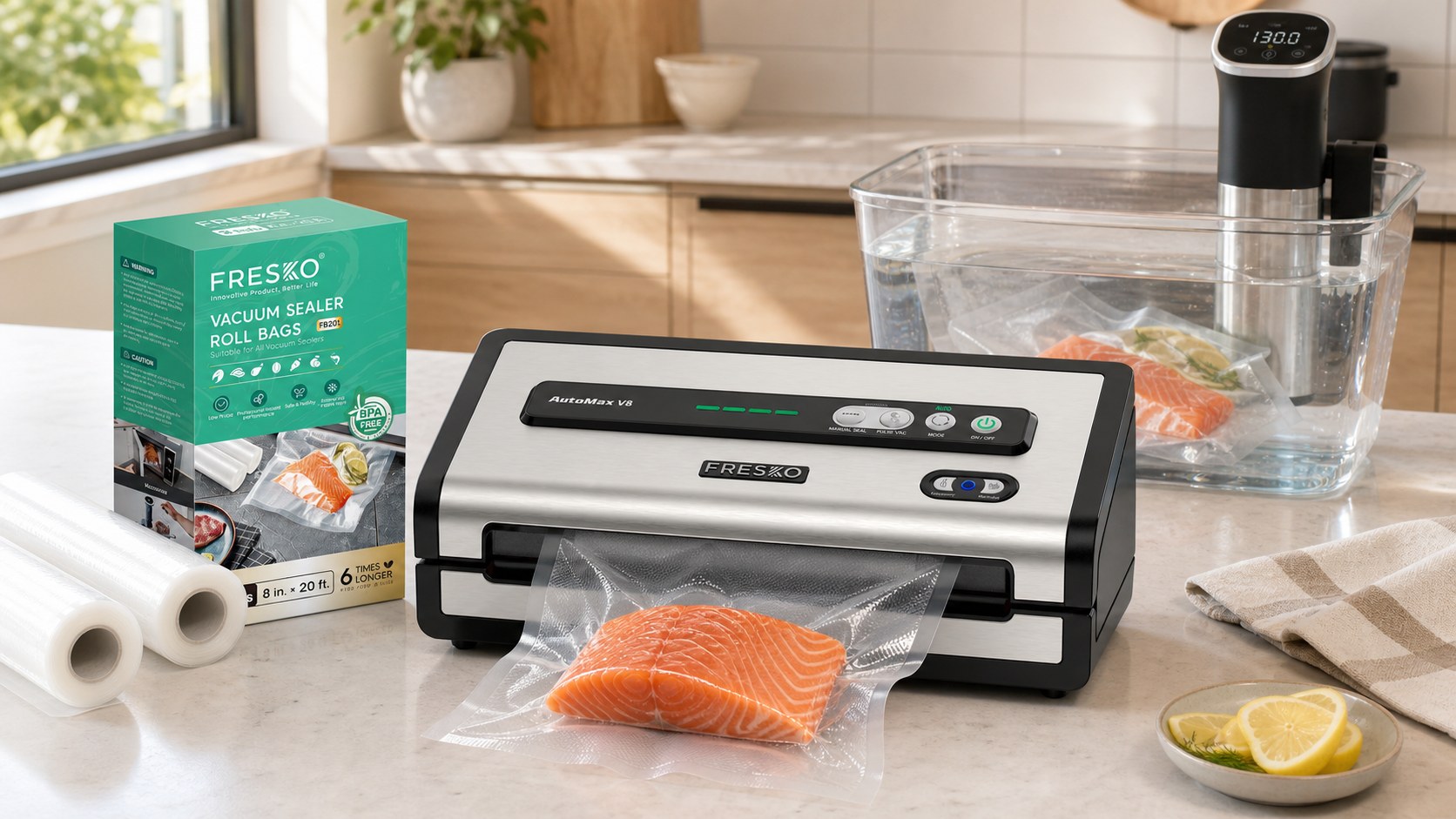
Faut-il sceller sous vide pour le sous vide ?
Malgré son nom — sous vide est un terme français qui signifie « sous vide » — la technique ne nécessite pas un vide de niveau laboratoire. L'emballage a quatre fonctions : empêcher l'eau d'entrer, retenir les jus, éliminer les poches d'air isolantes et maintenir les aliments sous la ligne de flottaison. Un sac de congélation à fermeture éclair peut remplir ces fonctions pour une cuisson occasionnelle en semaine.
Un scelleur sous vide le fait de manière plus constante. Il aspire la majeure partie de l'air du sac, rapproche le film de l'aliment et scelle l'ouverture à chaud. Cet emballage plus compact est plus facile à immerger, à organiser, à étiqueter, à congeler et à cuire plus tard. Il est particulièrement utile lorsqu'une fermeture éclair défectueuse ou un sac flottant ruinerait une cuisson nocturne.
| Situation de cuisson | Meilleure méthode d'ensachage | Pourquoi |
|---|---|---|
| Première cuisson sous vide | Sac de congélation à fermeture éclair + déplacement d'eau | Faible coût, facile et efficace pour de nombreuses cuissons courtes |
| Steak, poulet ou poisson en semaine | N'importe quelle méthode | Choisissez la commodité ; maintenez les aliments entièrement immergés |
| Préparation de repas ou portions cuites à partir de produits congelés | Machine sous vide | Les emballages compacts et étiquetés se rangent proprement et résistent à la brûlure de congélation |
| Cuissons longues, légumes ou coupes avec os | Machine sous vide | Élimination de l'air et scellage thermique plus fiables |
| Poisson délicat ou produits mous | Vide par pulsations/doux ou déplacement d'eau | Un vide complet peut comprimer les aliments |
| Soupes ou marinades liquides généreuses | Congeler d'abord ou utiliser une machine à cloche | Le liquide peut être aspiré dans un scelleur externe |
Comment cuisiner sous vide sans machine sous vide
La méthode de déplacement d'eau utilise la pression de l'eau pour chasser l'air d'un sac à fermeture éclair. C'est simple, mais les détails comptent :
- Choisissez un nouveau sac de congélation de qualité. Évitez les sacs sandwich fins et confirmez que le fabricant indique que le sac convient à la température et au temps d'utilisation prévus.
- Ajoutez les aliments en une seule couche. Gardez la zone de la fermeture éclair propre et évitez les os pointus qui pourraient perforer le film.
- Fermez la fermeture éclair presque entièrement. Laissez environ un pouce ouvert pour que l'air puisse s'échapper.
- Abaissez lentement le sac dans l'eau. Arrêtez-vous avant que la fermeture éclair n'atteigne la surface. L'eau pressera le film autour des aliments et forcera l'air à remonter.
- Scellez le dernier pouce. Clipsez le haut du sac au récipient et assurez-vous que les aliments restent sous la ligne de flottaison.
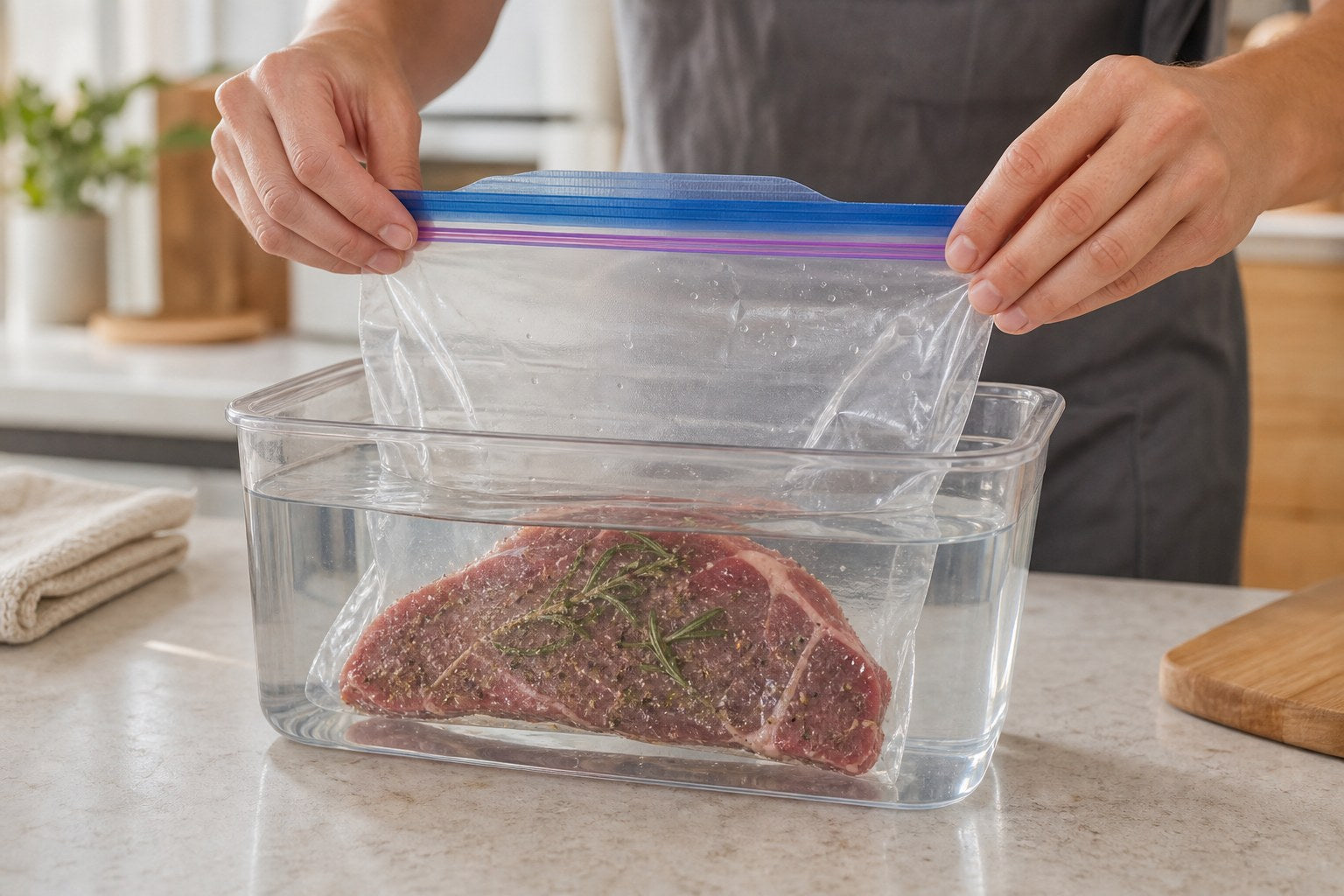
Cette méthode est particulièrement pratique pour les aliments riches en liquide, car vous contrôlez le sac à la ligne de flottaison au lieu de tirer le liquide vers une barre de scellage. Pour les cuissons très longues ou chaudes, cependant, un sac sous vide spécialement conçu et un scellage thermique sont le choix le plus fiable.
Quand une machine sous vide vaut la peine d'occuper de l'espace sur le comptoir
Vous cuisinez pendant des heures, pas des minutes
Les fermetures éclair et les films minces subissent plus de stress à mesure que le temps et la température augmentent. Un scellage sous vide propre et solide est utile pour les côtes courtes, l'épaule de porc, la poitrine de bœuf, les légumes fermes et d'autres cuissons prolongées. Un double scellage de l'extrémité ouverte ajoute une assurance peu coûteuse, tandis qu'un rembourrage ou un double ensachage des os pointus aide à prévenir les perforations.
Vous préparez en lots ou cuisinez à partir de produits congelés
Portionnez, assaisonnez, scellez, étiquetez et congelez les protéines pendant qu'elles sont fraîches. Plus tard, le sac peut passer du congélateur au bain-marie en utilisant une recette fiable qui tient compte du départ congelé. L'emballage sous vide limite également l'exposition à l'air pendant le stockage, aidant à protéger la qualité des aliments contre les brûlures de congélation. Si telle est votre routine, une machine sous vide pour la cuisson sous vide gagne souvent sa place avant même que vous n'allumiez le circulateur.
Vos sacs flottent
L'air emprisonné rend un sac flottant et crée une barrière entre les aliments et l'eau en circulation. Une machine sous vide élimine cet air plus régulièrement qu'un pressage manuel. Si un sac correctement scellé se gonfle par la suite, les aliments peuvent dégager du gaz ; utilisez une grille ou un poids sous vide et maintenez chaque partie des aliments sous l'eau.
Vous voulez un meilleur contrôle avec les aliments délicats ou humides
Le vide le plus fort n'est pas toujours le meilleur vide. Le contrôle par impulsion ou manuel vous permet d'arrêter avant que le saumon, les baies ou les légumes tendres ne soient écrasés. Un mode humide prolonge le temps de scellage lorsque de petites quantités de liquide atteignent la zone de scellage. Pour de grandes quantités de soupe ou de marinade, congelez le liquide à plat avant de le sceller ou envisagez une machine à cloche, qui gère les liquides bien mieux qu'un scelleur à aspiration externe.
Scelleuses sous vide externes vs. à chambre
Les scelleuses à aspiration externe sont le choix pratique pour la plupart des cuisines domestiques. Elles aspirent l'air par l'extrémité ouverte d'un sac texturé, puis le scellent à chaud. Elles sont compactes, abordables et bien adaptées aux steaks, volailles, poissons, légumes, à la préparation des repas et au stockage au congélateur. L'inconvénient est que le liquide qui coule peut être aspiré vers la pompe.
Les scelleuses à chambre placent le sac entier à l'intérieur d'une chambre et réduisent la pression autour de celui-ci. Elles gèrent les liquides et les marinades avec moins de désordre et offrent un contrôle précis du vide, mais elles sont plus grandes et considérablement plus chères. À moins que vous ne scelliez fréquemment des aliments très liquides ou que vous ne cuisiniez en grande quantité, un modèle externe est généralement le meilleur rapport qualité-prix.
Pour une utilisation domestique régulière, privilégiez des scellages fiables, un contrôle d'impulsion ou d'humidité, une option double-scellage, une zone d'égouttement amovible et une capacité suffisante pour la préparation par lots. Le rangement intégré des rouleaux et un cutter sont pratiques, mais un scellage constant est plus important qu'un panneau de commande encombré. Le Fresko AutoMax V8 ajoute la détection automatique des sacs et de l'humidité, des performances continues solides et la prise en charge des rouleaux personnalisés de 8 et 11 pouces.
Comment choisir des sacs sous vide pour sous vide
Le sac compte autant que la machine. Utilisez des sacs de qualité alimentaire explicitement évalués pour la température et la durée de cuisson sous vide. Les scelleuses à aspiration externe nécessitent des sacs texturés ou gaufrés ; leurs canaux permettent à l'air de se déplacer vers la pompe. Les machines à chambre utilisent généralement des sacs lisses car la chambre élimine la pression de tout l'environnement.
Les sacs prédécoupés sont les plus rapides pour des portions reproductibles. Les rouleaux vous permettent de fabriquer une pochette sur mesure pour les rôtis, les côtes ou les coupes irrégulières et peuvent réduire le gaspillage de matériaux. Choisissez la plus petite taille qui permet aux aliments de reposer à plat tout en laissant environ trois pouces d'espace libre et propre. Les sacs et rouleaux pour scelleuse sous vide Fresko sont sans BPA, gaufrés pour les machines externes, compatibles avec les principales marques de scelleuses sous vide et évalués jusqu'à 230°F/110°C.
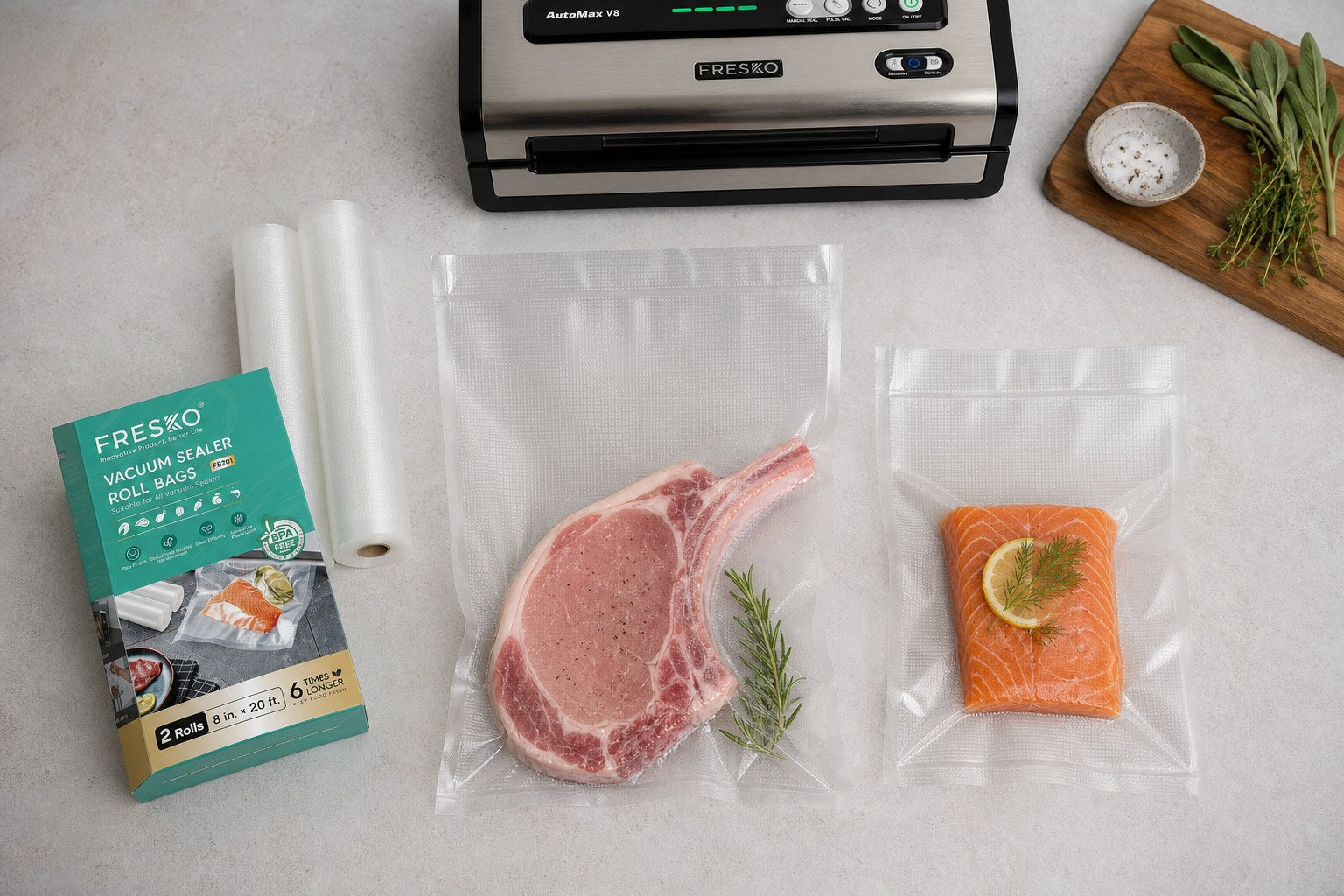
Comment obtenir un scellage fiable à chaque fois
- Coupez suffisamment de sac. Laissez environ trois pouces entre l'aliment et le bord ouvert.
- Repliez l'ouverture pendant le remplissage. Cela maintient les assaisonnements, l'huile et les particules alimentaires éloignés de la zone de scellage.
- Disposez les aliments en une seule couche. Les portions qui se chevauchent retiennent l'air et chauffent de manière moins uniforme.
- Séchez et aplatissez le bord ouvert. Les plis, la graisse et l'humidité créent des points faibles.
- Choisissez le bon réglage. Utilisez le mode impulsion/doux pour les aliments délicats et le mode humide pour les ingrédients juteux, si disponibles.
- Inspectez le scellage. Recherchez une ligne continue sans canaux ni plis. Ajoutez un deuxième scellage pour les cuissons longues ou les aliments avec os.
Pour une explication plus détaillée, consultez comment utiliser une machine sous vide étape par étape. Si un sac continue de flotter, de fuir ou de perdre son scellage, notre guide sur les 7 erreurs courantes de scellage sous vide qui ruinent votre cuisson en couvre les causes probables.
Principes de base de la sécurité alimentaire en sous-vide
Le scellement sous vide est un emballage, pas une pasteurisation. Il ne sauve pas les aliments périmés, ne rend pas la viande crue stable à la conservation, ni ne remplace la réfrigération, l'assainissement et un programme de temps et de température validé. L'USDA note que les emballages sous vide nécessitent une réfrigération. Si vous cuisinez maintenant et servez plus tard, suivez une recette fiable pour un refroidissement rapide — généralement un bain de glace — puis réfrigérez ou congelez rapidement. Jetez un emballage qui fuit ou qui est gonflé lorsque sa sécurité est incertaine.
Suivez toujours les instructions du fabricant de l'appareil et du sac. Pour des conseils prudents sur les températures minimales de cuisson à domicile, consultez le tableau des températures internes minimales sûres de l'USDA.
Foire aux questions
Peut-on faire du sous vide sans machine sous vide ?
Oui. Un nouveau sac de congélation à fermeture éclair de qualité alimentaire et la méthode de déplacement de l'eau conviennent à de nombreuses cuissons courtes à température modérée. Utilisez un sac sous vide résistant à la chaleur et un scelleur pour une plus grande fiabilité lors de cuissons longues ou à haute température.
Puis-je utiliser des sacs de scellage sous vide ordinaires pour le sous vide ?
Uniquement si le fabricant les identifie comme étant de qualité alimentaire et adaptés à la température et à la durée de cuisson sous vide. La compatibilité du sac avec la machine n'est pas la même que l'aptitude à la chaleur.
Le scellage sous vide accélère-t-il la cuisson sous vide ?
Généralement pas de manière spectaculaire. L'élimination de l'air améliore le contact entre le sac et l'eau et peut favoriser un chauffage plus uniforme, mais l'épaisseur des aliments et le temps et la température choisis restent les principaux facteurs.
Dois-je doubler les sacs sous vide ?
C'est une assurance intelligente pour les cuissons longues, les portions lourdes, les morceaux avec os ou les sacs qui seront congelés et manipulés avant la cuisson. Placez le deuxième scellage légèrement au-dessus du premier sur une section propre et sèche du film.
Puis-je sceller sous vide des aliments avec une marinade ?
Oui, mais une scelleuse externe peut aspirer le liquide vers la pompe. Refroidissez ou congelez partiellement la marinade, laissez un espace supplémentaire et utilisez le mode impulsion ou humide. Congelez de grandes quantités de liquide avant de les sceller ou utilisez une scelleuse à cloche.
Les aliments sous vide scellés sont-ils stables à température ambiante ?
Non. Les aliments périssables scellés sous vide nécessitent toujours une cuisson sûre et une conservation au froid. Gardez-les réfrigérés ou congelés, et refroidissez rapidement les aliments cuits lorsqu'ils ne seront pas servis immédiatement.
Le mot de la fin
Vous pouvez commencer la cuisson sous vide ce soir sans acheter un nouvel appareil. Utilisez un sac de congélation robuste, retirez l'air soigneusement et maintenez les aliments immergés. Mais si vous préparez des repas, achetez en vrac, cuisinez à partir de produits congelés ou effectuez des cuissons longues, une machine sous vide transforme un processus réalisable en un processus reproductible. Explorez les machines sous vide Fresko et les sacs prêts pour le sous vide pour construire la configuration qui convient à votre cuisine.
Partager:
Comment choisir la bonne taille de sac pour votre scelleuse sous vide
7 erreurs courantes de mise sous vide en cuisson sous vide qui gâchent votre plat (Guide 2026)