

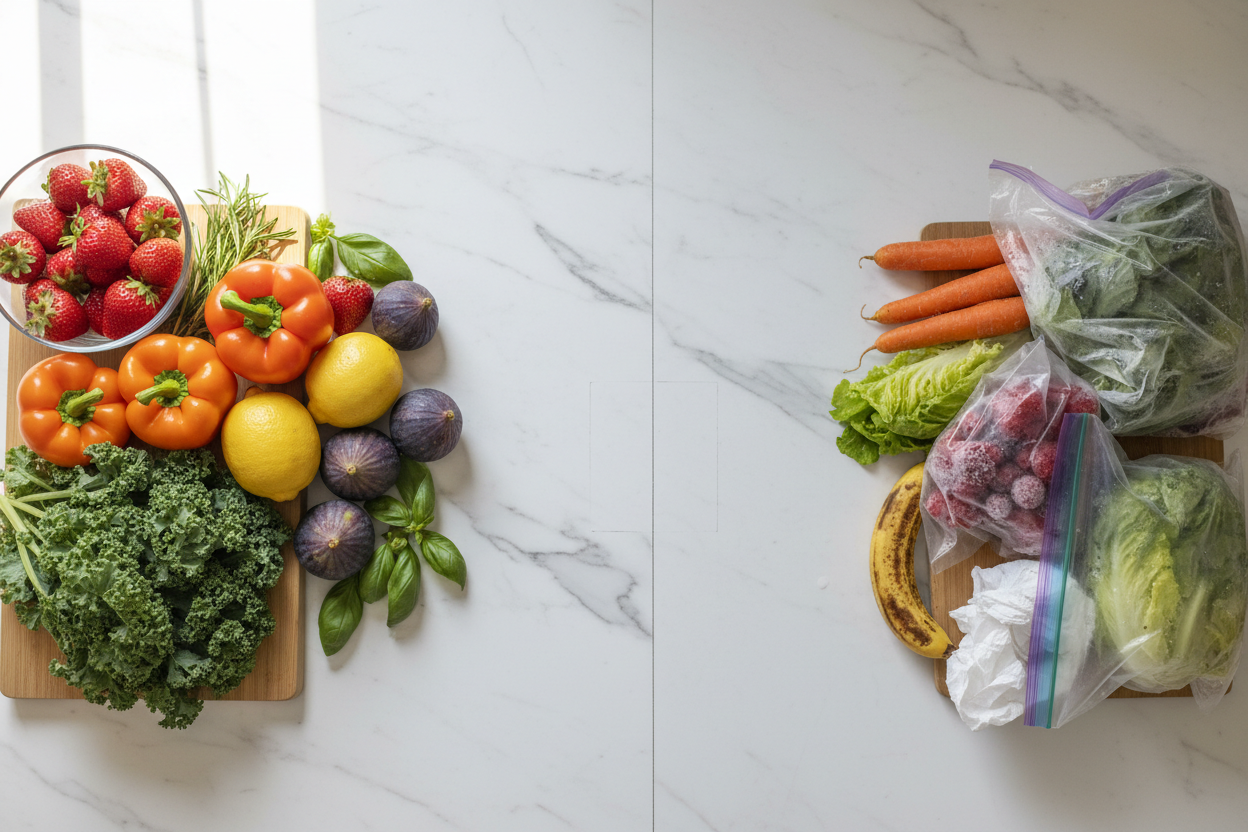

Le gaspillage alimentaire commence souvent avec de bonnes intentions : des produits frais achetés pour la semaine, de la viande en vrac divisée pour plus tard, des restes de dîner conservés, ou des ingrédients de garde-manger ouverts puis oubliés. Le défi n'est pas toujours d'acheter moins de nourriture. Il s'agit de stocker les aliments de manière à ce qu'ils restent organisés, protégés et plus faciles à utiliser avant qu'ils ne se gâtent.
C'est là que la mise sous vide peut faire une différence significative dans une cuisine quotidienne. En éliminant l'excès d'air des sacs spécialement conçus, une scelleuse sous vide permet de créer un environnement de stockage alimentaire plus hermétique qu'un récipient ordinaire ou un sac mal fermé. Pour les cuisiniers amateurs, les préparateurs de repas, les adeptes de la cuisson sous vide et les familles occupées, cela peut transformer le stockage des aliments d'une habitude de dernière minute en un système simple.
Que fait réellement la mise sous vide ?

La mise sous vide élimine l'air d'un sac puis scelle l'ouverture par la chaleur. Cela permet de réduire le contact de l'aliment avec l'oxygène, l'un des principaux facteurs qui affecte la fraîcheur, la texture, l'arôme et la qualité au congélateur au fil du temps.
Ce n'est pas un substitut à une réfrigération, une congélation ou une manipulation alimentaire sûre et appropriée. Les aliments périssables doivent toujours être conservés à la bonne température. Mais comparée aux aliments emballés de manière lâche, la mise sous vide vous offre un moyen plus propre, plus compact et plus protecteur de conserver les ingrédients.
Pourquoi l'exposition à l'air est importante pour la conservation des aliments
L'exposition à l'air peut dessécher les aliments, atténuer leur saveur et rendre la conservation au congélateur moins efficace. Lorsque les aliments congelés ne sont pas bien scellés, l'air peut atteindre la surface et provoquer des brûlures de congélation. Lorsque les articles secs du garde-manger sont laissés ouverts, ils peuvent perdre leur arôme ou absorber l'humidité de l'environnement de la cuisine.
Un sac scellé sous vide permet de limiter cette exposition. Le résultat est une fermeture plus hermétique autour des aliments, moins d'espace gaspillé dans le réfrigérateur ou le congélateur, et un moyen plus fiable de portionner les ingrédients pour les futurs repas.
Meilleurs aliments à mettre sous vide à la maison

La mise sous vide fonctionne particulièrement bien pour les ingrédients qui bénéficient d'un contrôle des portions et d'un stockage protégé. Les exemples courants incluent :
- Viande, volaille et poisson : divisez les achats en gros en portions de repas avant de congeler.
- Légumes : préparez les ingrédients à l'avance pour la cuisine en semaine ou la conservation au congélateur.
- Fromage : rescelez les gros blocs après ouverture pour aider à protéger la saveur et la texture.
- Produits secs : stockez les grains de café, les noix, le riz, les céréales ou les ingrédients de boulangerie en plus petites portions.
- Restes : conservez les repas cuits dans des emballages plats, adaptés au congélateur, qui s'empilent proprement.
- Repas sous vide : préparez des portions scellées prêtes pour une cuisson précise au bain-marie.
Pour les aliments délicats, il est préférable d'utiliser un réglage doux ou pour aliments humides si disponible, ou de précongeler les articles plus mous avant de les sceller afin qu'ils conservent leur forme.
Comment la mise sous vide soutient la préparation des repas

La préparation des repas est plus facile lorsque les ingrédients sont déjà portionnés, étiquetés et prêts à cuire. Au lieu de tout stocker dans de grands récipients, vous pouvez sceller sous vide des portions individuelles ou des portions prêtes pour une recette.
Par exemple, vous pouvez faire mariner du poulet dans des sacs séparés, portionner les ingrédients pour smoothies, congeler la soupe à plat ou préparer des légumes pour les sautés. Lorsque les aliments sont scellés dans des emballages plus minces et plus plats, ils occupent généralement moins d'espace que les récipients encombrants et sont plus faciles à empiler dans les tiroirs ou les bacs de congélation.
Ce système contribue également à réduire la fatigue décisionnelle. Lorsque vous pouvez voir des portions étiquetées dans le réfrigérateur ou le congélateur, il est plus facile de planifier le dîner en fonction de ce que vous avez déjà.
Mise sous vide vs sacs de rangement ordinaires

Les sacs de rangement ordinaires sont pratiques, mais ils emprisonnent souvent de l'air supplémentaire à l'intérieur. Même lorsque vous pressez l'air à la main, des poches restent autour des aliments. La mise sous vide crée un processus d'élimination de l'air plus complet et scelle le sac par la chaleur, ce qui est particulièrement utile pour la conservation au congélateur et les cycles d'organisation plus longs.
Les récipients réutilisables ont toujours leur place dans la cuisine, surtout pour les restes à court terme et les repas prêts à consommer. La mise sous vide est la plus utile lorsque vous souhaitez un rangement compact, un meilleur contrôle des portions, une organisation adaptée au congélateur, ou des sacs scellés pour la cuisson sous vide.
Conseils pour de meilleurs résultats de mise sous vide
- Laissez suffisamment d'espace en haut du sac. Cela donne à la scelleuse de l'espace pour créer un joint propre.
- Gardez la zone de scellement sèche. L'humidité ou les miettes près de l'ouverture peuvent affaiblir le joint.
- Étiquetez avant de congeler. Ajoutez le nom de l'aliment et la date afin de pouvoir faire tourner les articles plus anciens en premier.
- Utilisez la bonne taille de sac. Les petites portions sont plus faciles à stocker, à décongeler et à utiliser.
- Précongelez les aliments mous ou juteux. Cela aide à éviter l'écrasement et empêche le liquide d'être aspiré vers le joint.
Choisir une scelleuse sous vide pour un usage quotidien
Une bonne scelleuse sous vide domestique doit être facile à utiliser, constante et suffisamment pratique pour être laissée sur votre comptoir ou sortie régulièrement. Les scelleuses sous vide Fresko sont conçues pour le stockage quotidien en cuisine, avec des options telles que le scellement mains libres, le fonctionnement automatique, des designs compacts, des réglages pour aliments humides et secs, et des indicateurs de progression clairs selon le modèle.
Pour les utilisateurs qui souhaitent une expérience mains libres, la scelleuse sous vide entièrement automatique mains libres Fresko V8 est conçue pour une utilisation simple à une touche. Pour une configuration compacte, la scelleuse sous vide automatique compacte Fresko V1 offre un design peu encombrant pour les petites cuisines. L'association de votre machine avec les sacs de mise sous vide prédécoupés FRESKO peut également rendre le scellement quotidien plus rapide et plus pratique.
Le résultat final
La mise sous vide n'est pas seulement destinée aux acheteurs en gros ou aux préparateurs de repas sérieux. C'est une habitude de cuisine pratique pour quiconque souhaite mieux organiser les ingrédients, protéger les aliments de l'exposition excessive à l'air, faciliter le stockage au congélateur et réduire le risque de restes oubliés.
Avec la bonne scelleuse sous vide et les bons sacs, Fresko facilite la mise en place d'une routine de conservation des aliments plus propre et plus efficace – une portion scellée à la fois.
Partager:
Comment emballer sous vide des liquides sans faire de dégâts : Un guide complet pour les cuisiniers amateurs et les adeptes du batch cooking
Comment sceller sous vide des bocaux Mason pour des aliments secs plus frais