

Quick answer: Freezer burn is surface drying that develops when frozen food loses moisture. Dry, pale, grayish-brown, or leathery patches are common clues. It changes eating quality, not safety by itself. However, its appearance cannot prove food was handled safely, and ice crystals alone do not establish that food is freezer-burned.
You open a bag of chicken and find a pale edge, or lift the lid on ice cream and see a gritty layer. Is it freezer burn, ordinary frost, or a reason to discard the food? Start with two separate questions: what changed in the food, and was it kept at safe temperatures?
This page explains the signs and the quality changes. For the packaging routine, use our freezer-burn prevention checklist. A longer checklist is not needed to identify what you are looking at.
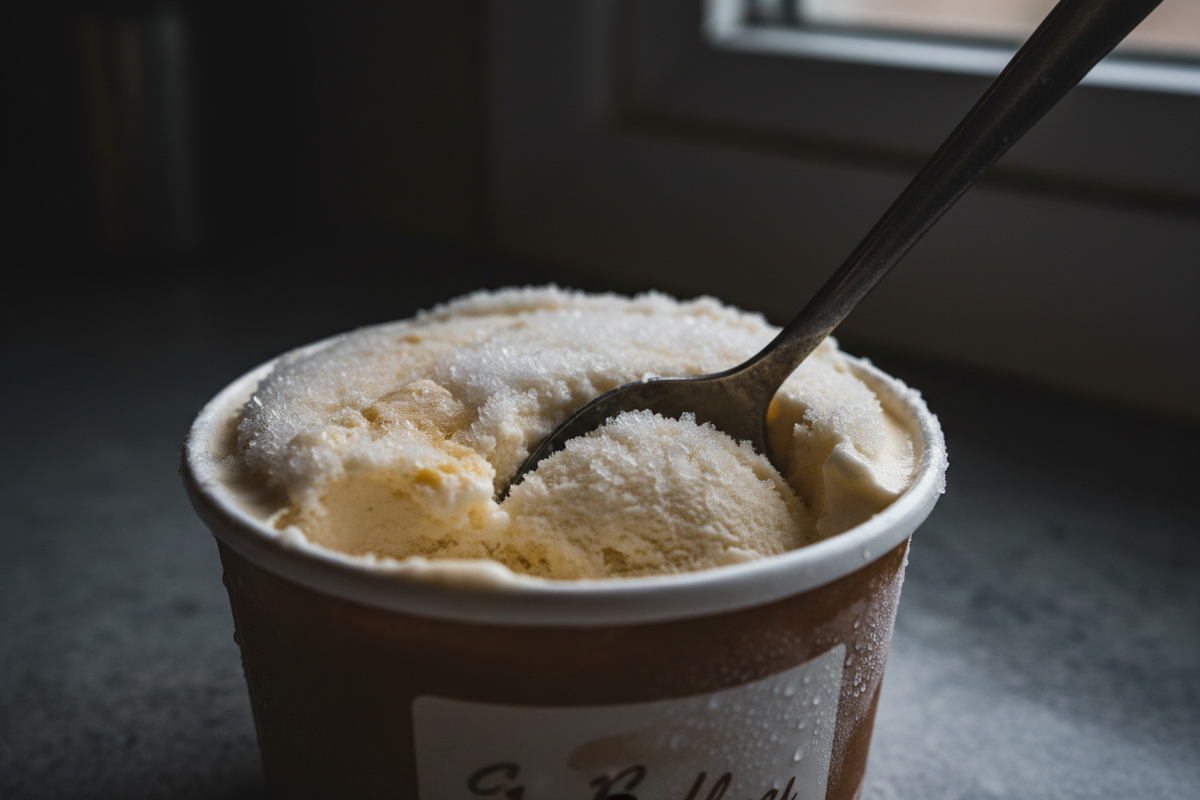
Hero image: Coarse crystals can change the texture of ice cream. This illustration does not establish how a particular container was stored.
What is freezer burn?
Freezer burn describes dehydration at the surface of frozen food. Ice can become water vapor without first turning into liquid, a process called sublimation. When moisture leaves the surface, an area can become drier, tougher, and less appealing. Exposure to air can also contribute to changes in flavor.
The word “burn” is misleading. Nothing has been scorched, and the freezer is not necessarily too cold. USDA describes freezer burn as dry, grayish-brown, leathery areas caused by air reaching the food. Its guidance separates that quality defect from a food-safety problem.
Not every color change fits that description. Frozen meat can darken or become paler for several reasons, including changes in oxygen exposure. A package that looks different from the day it was purchased therefore needs context, not a diagnosis based on color alone.
Signs of freezer burn on different foods
Look for a combination of surface dryness, texture change, and location. An exposed edge tells a different story from a small amount of loose frost stuck to the outside of a bag. The following clues help describe a quality problem; none can certify food safety.
| Food | Possible quality clues | What not to conclude |
|---|---|---|
| Meat and poultry | Dry, leathery areas; pale or grayish-brown surface patches | Color alone does not prove freezer burn or safe handling |
| Fish and shrimp | Dried edges or dull-looking surface areas; poorer texture after thawing | A white patch is not a complete safety assessment |
| Vegetables | Surface drying, shriveling, or loss of appealing color | Softness after thawing is not always freezer burn |
| Bread | Dry or tough exposed surfaces | All staleness cannot be attributed to freezer burn |
| Ice cream | An icy, grainy surface rather than a smooth texture | Large crystals may reflect temperature-related texture changes, not a safety verdict |
Keep the original label and storage date in view while assessing the package. Those details will not reveal every problem, but they are more useful than guessing from a photo. If someone else packed the food, ask when it was prepared and how it was cooled before deciding what to do next.
Freezer burn, frost, and ice crystals are not identical
Frost is frozen moisture. It may collect on packaging, freezer surfaces, or food. Freezer burn is damage from moisture loss at the food's surface. They can occur together, but loose frost does not automatically mean the food beneath it is badly dried out.
A small frost layer inside a bag might be a packaging clue. A heavily frosted freezer might need a door-seal or temperature check. Neither observation tells you how long the food spent at any particular temperature. Record what you know rather than turning visible ice into a guarantee of safety or a reason for automatic disposal.
People sometimes call freezer-burned food “frostbitten.” That is an informal description, not a separate storage condition requiring a different remedy. The practical questions remain the same: how much quality was lost, and was the food handled safely?

Why does it happen in a freezer?
A freezer slows many changes; it does not make every package an ideal long-term barrier. A loose wrap, damaged seam, or unsuitable bag can leave the food exposed. USDA recommends freezer-appropriate packaging and extra protection around thin supermarket wrapping for extended storage.
Time and storage conditions also matter. Temperature fluctuations can affect frozen-food quality, but it is inaccurate to say every brief door opening partially thaws the food. The actual food temperature, duration of warming, package, and food type all influence the result.
A useful example is two portions from the same purchase: one is used soon, while the other spends months in a partly open bag. Different results would not establish a universal shelf life for either packaging method. This is why an exact “weeks until freezer burn” chart is not dependable.
Is freezer-burned food safe to eat?
Freezer burn alone does not make food unsafe. That does not mean all frosty food is safe. The statement assumes appropriate handling and storage; it cannot cancel a period of unsafe thawing, contamination, or poor cooling before freezing.
Use a thermometer and the handling history when the concern is a power outage or an open freezer door. USDA's emergency guidance explains when food with remaining ice crystals or a temperature of 40°F or below can be refrozen or used. When that history is uncertain, do not rely on a normal smell or taste.
Harmful bacteria do not necessarily produce an obvious change in appearance or odor. The FDA's storage advice emphasizes temperature control and distinguishes quality changes from safety risks. Never taste questionable food to find out whether it is safe.
Can you improve the taste or texture?
First establish that handling was safe. For food with mild, localized quality damage, USDA recommends cutting away freezer-burned areas before or after cooking. Extensive damage can justify discarding the food for quality reasons even when its temperature history was acceptable.
Choose a use that suits the remaining texture. A sauce or soup may make a dry portion less noticeable than a preparation in which the food stands alone. That is a serving choice, not a way to reverse the damage or make unsafe food safe. Do not describe rinsing or marinating as a cure.
There is no single countdown for every package. For meat, consult the meat refrigerator and freezer storage guide, which keeps refrigerator limits separate from freezer quality recommendations.
Common questions about freezer burn
Can vacuum-sealed food still get freezer burn?
Yes. A puncture, imperfect seal, remaining air, unsuitable packaging, or lengthy storage can still affect quality. Vacuum sealing is not proof that the package stayed intact.
Does freezer burn mean the freezer is too cold?
No. Keep the freezer at 0°F (-18°C) or below, as USDA recommends. Raising the temperature is not a remedy for drying.
Should I replace every frosty package?
No. Check the food's condition and its handling history separately. A package with ordinary frost is not automatically spoiled, and a frost-free package is not automatically safe.
The takeaway: freezer burn describes a change in food quality. Identify the dry surface damage, check the safety history independently, and improve packaging for the next batch instead of treating appearance as a complete answer.
Share:
How Long Does Vacuum-Sealed Meat Last? Storage Conditions Explained
Vacuum Sealing Meat with Bones: How to Reduce Bag Punctures