

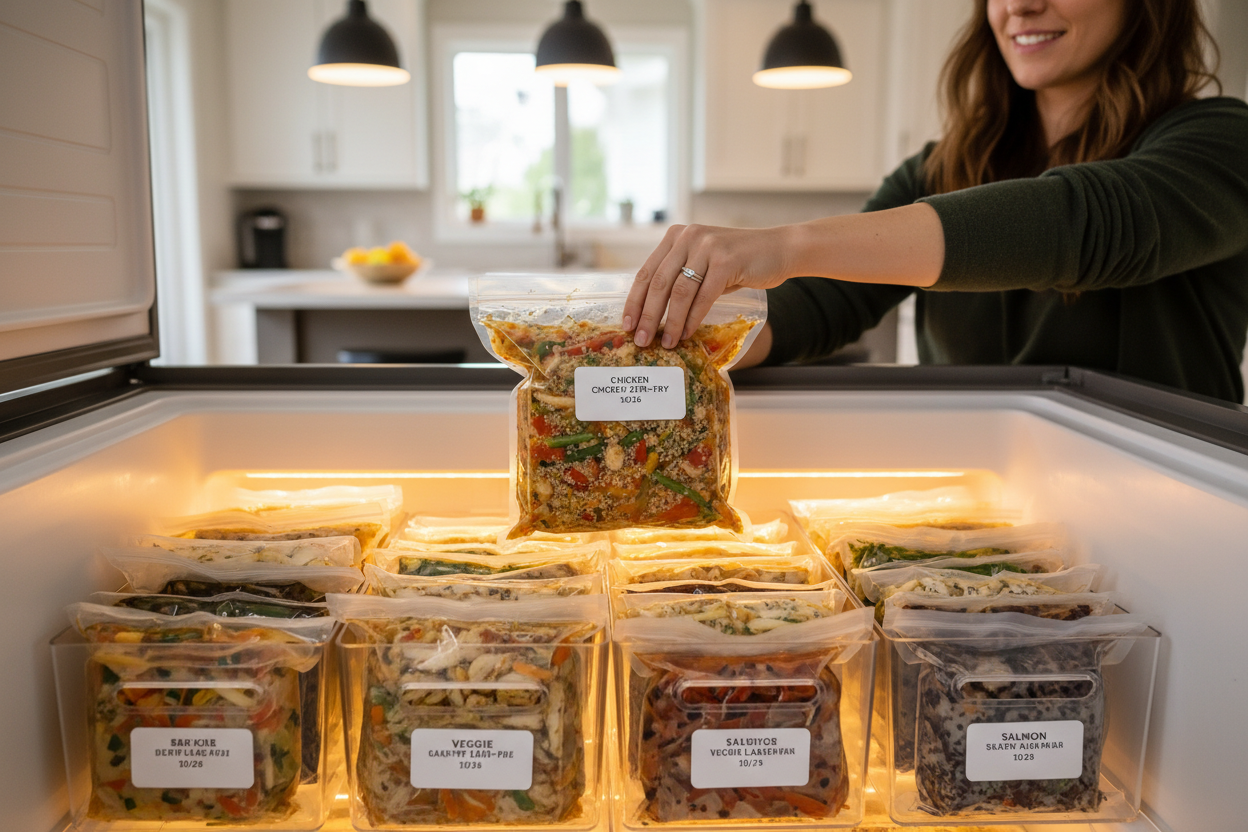

Quick answer: Freezer burn is dehydration, not spoilage. It happens when moisture on the surface of frozen food escapes into the air as vapor (a process called sublimation), leaving dry, grayish-white patches behind. It's caused by air contact — from loose packaging, temperature swings, or long storage time — and while it makes food tougher, drier, and blander, it does not make food unsafe to eat. The fix is almost always the same: get the air out before you freeze.
If you've ever pulled a bag of chicken or a pint of ice cream out of the freezer only to find it covered in frosty white patches, you've met freezer burn. It's one of the most common — and most misunderstood — reasons good food ends up in the trash. Below, we'll cover exactly what it is, what causes it, how to spot it on different foods, whether it's actually safe to eat, and the methods that genuinely stop it.

What Is Freezer Burn?
Freezer burn is the dry, leathery, discolored patches that form on frozen food after moisture escapes from its surface. It shows up as grayish-brown spots on meat, chalky white patches on vegetables, or icy, gritty crystals on ice cream and baked goods.
It is not mold, and it isn't caused by the freezer being "too cold." It's simply moisture loss. Once water leaves the surface of the food, it can't come back — which is why freezer burn changes texture and flavor permanently, even though it doesn't make food dangerous.
What Causes Freezer Burn?
Freezer burn happens through a process called sublimation: water inside frozen food converts directly from ice into vapor without ever becoming liquid. That vapor escapes into the surrounding air, and as it does, it strips moisture from the food's surface and often re-deposits as ice crystals on the inside of the packaging.
Three conditions accelerate this process:
- Air exposure. Any pocket of air trapped against food gives moisture somewhere to go. The more air, the faster the sublimation.
- Temperature fluctuation. Every time a freezer door opens, or a freezer runs warmer than 0°F (-18°C), food partially thaws and refreezes — and each cycle pulls more moisture to the surface.
- Time. Even well-wrapped food will eventually freezer-burn. Every food has a realistic freezer shelf life, and the longer it sits, the more moisture it loses.
Loose or non-airtight packaging is the multiplier behind all three — it's the reason two identical cuts of meat can freeze completely differently depending on how they were wrapped.

How to Tell If Something Is Freezer Burned
Signs of freezer burn vary a bit by food type, but the pattern is consistent: dryness, discoloration, and ice crystals concentrated at the surface rather than throughout.
- On meat and chicken: grayish-brown or white patches, a leathery or tough texture at the edges, and visible ice crystals inside the packaging.
- On fish and shrimp: dull, chalky white or opaque discoloration, a dry or fibrous texture instead of the usual firm, glossy look.
- On vegetables: shriveled, dry patches or a slightly frosted, dull surface, sometimes with a mushy texture once thawed.
- On ice cream: large, gritty ice crystals on the surface and a grainy texture instead of smooth cream.
- On bread and baked goods: a dry, stale texture and small ice crystals inside the bag.
If you're not sure whether what you're looking at is freezer burn or just normal frost, the giveaway is location and texture: freezer burn is dry and discolored on the food itself, not just a dusting of frost on the packaging.

Freezer Burn vs. Frostbite vs. Ice Crystals: What's the Difference?
These terms get used interchangeably, but they aren't quite the same thing.
| Term | What It Actually Is | Where It Shows Up |
|---|---|---|
| Freezer burn | Dehydration of the food's surface from sublimation | Directly on meat, produce, baked goods, ice cream |
| "Frostbite" on food | Informal term people use for freezer burn — not a distinct food-science term | Same as freezer burn |
| Ice crystals | Frozen moisture that escaped the food and refroze nearby | Inside the packaging, on the food's surface, or on freezer walls |
In everyday language, "frostbite" on food and freezer burn describe the same thing. Ice crystals are usually a symptom of the same underlying moisture loss, though a small amount of ice crystal formation is normal in any freezer and doesn't automatically mean the food is ruined.
Is Freezer-Burned Food Safe to Eat?
Yes. According to the USDA, freezer burn is a quality issue, not a food safety issue. Freezer-burned food will not make you sick, and it doesn't indicate bacterial growth or spoilage — it's simply moisture loss.
That said, a few common questions come up around this:
Can freezer burn make you sick? No. Freezer burn itself does not cause foodborne illness. The food is still safe as long as it was frozen properly and stayed at a safe temperature the whole time.
Is freezer-burned food dangerous or harmful? No — "dangerous" and "harmful" both point to food-safety risk, and freezer burn doesn't carry one. The downside is entirely about eating quality: drier texture, tougher bite, and duller flavor.
Can you eat freezer-burned shrimp, chicken, or ice cream? Yes. All are safe to eat once properly cooked (or, for ice cream, simply thawed to serving temperature). Shrimp and fish tend to show freezer burn's effects on texture the most dramatically, so if the burned portion is small, trimming it off before cooking usually gives the best result.
Is it safe to eat freezer-burned or "frostbitten" sausage or other processed meat? Yes, the same rule applies — freezer burn on sausage, hot dogs, or other processed meats affects texture and taste, not safety, provided the product was stored at a safe freezer temperature throughout.
The one caveat worth flagging: freezer burn is a quality signal, not a safety one, but it's still worth confirming the food was frozen and stored correctly in the first place (i.e., it didn't sit out and thaw for hours before refreezing). That's a separate food-safety question from freezer burn itself.
Why Is Freezer Burn "Bad" If It's Not Dangerous?
Freezer burn is worth avoiding because it degrades everything that makes food enjoyable to eat:
- Texture — meat gets tougher and stringier; vegetables turn mushy or rubbery; ice cream turns icy and grainy instead of smooth.
- Flavor — dehydration concentrates some flavors while dulling others, and prolonged air exposure allows oxidation, which can create off, slightly rancid notes in fattier foods.
- Value — freezer burn is one of the most common (and most preventable) sources of food waste. If you're buying in bulk or meal-prepping to save money, freezer burn quietly erases those savings.

How to Prevent Freezer Burn: Methods That Actually Work
Every prevention method comes down to one lever: reducing the food's exposure to air. Here's how the common options stack up.
| Method | Air Removal | Typical Freezer Life Before Burn | Freezer Burn Risk |
|---|---|---|---|
| Ziplock bag (air pushed out by hand) | Partial | 1–3 months | High |
| Aluminum foil / plastic wrap alone | Minimal | 2–4 weeks | Very High |
| Rigid container with lid | Partial (air gaps remain) | 1–2 months | Medium |
| Butcher paper + freezer bag (double-wrap) | Good | 2–4 months | Medium-Low |
| Vacuum sealing | Near-total | 6–12+ months | Very Low |
1. Remove as Much Air as Possible Before Freezing
This is the single biggest factor. A vacuum sealer removes nearly all of the air surrounding food before sealing it, which directly slows sublimation — often extending freezer life several times over compared to a standard bag. If you don't own a vacuum sealer, the water-displacement method (lowering a zip-top bag into water so the pressure pushes air out before sealing) is a reasonable low-cost alternative for short-term storage.
2. Keep Your Freezer at 0°F (-18°C) or Below
Even perfectly packaged food will freezer-burn faster in a freezer that runs warm or fluctuates. A simple freezer thermometer takes the guesswork out, and avoiding an overstuffed door shelf (which sees the biggest temperature swings) helps keep things consistent.
3. Cool Food Before Freezing
Putting warm food directly into the freezer raises the temperature around it, causing nearby items to partially thaw and refreeze — accelerating moisture loss for everything in the vicinity. Let food cool to room temperature, or refrigerate briefly, before freezing.
4. Portion Before You Freeze
Opening a package, removing some contents, and refreezing the rest introduces fresh air every time. Sealing food in individual, meal-sized portions means you only ever open what you're about to use. (how long different foods hold up in the freezer)
5. Double Up on Packaging for Longer Storage
For items you plan to keep more than a couple of months, an inner layer (plastic wrap or butcher paper pressed directly against the food) plus an outer airtight layer (a vacuum-sealed bag or heavy freezer bag) gives extra protection against slow air leaks.
6. Label and Rotate (First In, First Out)
Freezer burn risk climbs the longer food sits, no matter how well it's packaged. Label everything with the freeze date and use older items first.
Freezer Burn on Specific Foods

Chicken and other meat. Look for grayish-brown discoloration and a dry, tough texture concentrated at the edges. Because meat has high moisture content, it's especially prone to sublimation — vacuum sealing before freezing is the most effective single fix, and it's also the easiest way to vacuum sealing chicken before freezing at a glance before cooking.

Shrimp and fish. Seafood is even more moisture-sensitive than red meat, and its texture suffers fast once dehydration starts — shrimp in particular can turn rubbery or mealy. Freezer-burned shrimp is still safe to eat once cooked; if only the surface is affected, rinsing and trimming the driest spots before cooking helps. Sealing shrimp and fish immediately after purchase (rather than after a day or two in the fridge) gives the best results, since seafood starts losing quality the moment it's out of the water.

Ice cream. Yes, ice cream gets freezer burned — it shows up as icy, grainy patches on the surface rather than the initial smooth texture. It's still fine to eat; the ice crystals are just water that separated out of the mix. Pressing plastic wrap directly against the surface before closing the lid slows this down, and keeping the carton toward the back of the freezer (away from the door) helps too.
Vegetables. Raw vegetables frozen without blanching first tend to freezer-burn faster and go mushy once thawed, because the enzymes that break them down are still active. A quick blanch (brief boil, then an ice bath) before freezing slows this significantly and helps vegetables keep their color, texture, and nutrients longer.
Bread and baked goods. Bread dries out quickly in the freezer without a tight seal, going stale and crumbly. Vacuum sealing sliced bread in usable portions keeps it soft far longer than a standard bread bag.
Soups, sauces, and other liquids. Liquids expand as they freeze, so leave about a half-inch of headroom in any container — otherwise the seal can crack. Once frozen solid, transferring liquid to a tighter-fitting or vacuum-sealed container removes the remaining air pocket and slows further ice crystal buildup.
How to Get Rid of Freezer Burn (or the Taste of It)
Freezer burn itself can't be reversed — once moisture has left the food, that texture change is permanent. But you can minimize its impact:
- Trim it off. For meat, fish, and firm vegetables, cutting away the driest, most discolored portion before cooking removes most of the off-texture and off-flavor, leaving the rest perfectly usable.
- Cook around it. Moist-heat methods — braising, stewing, simmering in sauce — rehydrate tougher, freezer-burned portions better than dry-heat methods like grilling or roasting, which tend to make the dryness more noticeable.
- Mask mild cases. A marinade, brine, or bold sauce can offset minor flavor loss, especially on meat and poultry.
- When to let it go. If freezer burn covers most of the item and the texture is significantly affected, it's still technically safe — but at that point it's a judgment call on whether it's worth eating versus replacing.
FAQ
What is freezer burn, in one sentence? Freezer burn is dehydration of frozen food's surface caused by moisture escaping into the air, leaving dry, discolored, sometimes ice-crystal-covered patches behind.
How do you know if something is freezer burned? Look for dry, grayish or white discoloration on the food's surface, a tougher or leathery texture, and visible ice crystals on or around the food — not just frost on the outside of the packaging.
How can you tell if chicken is freezer burned? Check for grayish-white or dull patches on the surface and a dry, tough texture at the edges. If it's minor, trim the affected area before cooking; the rest of the chicken is fine.
Does freezer burn make you sick, or is it dangerous? No. Freezer burn is a quality change, not a safety risk. It won't cause illness — it just affects texture and taste.
Can you eat food with freezer burn? Yes, freezer-burned food is safe to eat. Trim off badly affected portions if you want the best texture, or use a cooking method (like braising) that helps offset the dryness.
How do you stop or avoid freezer burn? Remove as much air as possible before freezing (vacuum sealing is the most effective method), keep your freezer at 0°F or below, cool food before freezing, and use items within a reasonable timeframe.
How do you get rid of freezer burn taste? You can't fully reverse it, but trimming the driest portions and using moist-heat cooking methods (stews, braises, sauces) significantly reduces how noticeable it is.
Is freezer burn the same as frostbite on food? "Frostbite" is just the informal name people use for freezer burn — they refer to the same dehydration process.

The Bottom Line
Freezer burn isn't random, and it isn't dangerous — it's a predictable result of air exposure, temperature swings, and time. It affects texture and flavor, not safety, which means the food in your freezer covered in frost is still perfectly fine to eat. The real fix is prevention: cutting off the food's access to air is what actually stops sublimation at the source, and that's exactly what a good vacuum sealer is built to do.
If you're tired of trimming freezer-burned edges off good food, a vacuum sealer like the Fresko AutoMax V2, V6, or V8 removes air far more thoroughly than a zip-top bag or container ever can — which is why vacuum-sealed food routinely lasts 3–5x longer in the freezer before quality starts to drop. Pair it with Fresko's BPA-free vacuum sealer bags and rolls, portion your food before freezing, and label everything with the date — three habits that solve most freezer burn problems for good.
Share:
How to Vacuum Seal Mason Jars for Fresher Pantry Staples
World Cup Flavors: A Global Grilling Tour You Can Marinate in Minutes