


Introduction
If you’re wondering how to vacuum seal food for sous vide cooking, you’re not alone.
Sous vide has become one of the most popular cooking methods for home cooks who want restaurant-quality results without complicated techniques. From perfectly cooked steak to tender chicken and flavorful seafood, sous vide makes it easier to achieve consistent results every time.
But one question many beginners ask is:
Do you need to vacuum seal for sous vide?
The short answer: vacuum sealing is not always required, but it is one of the best ways to get the most out of sous vide cooking.
By removing excess air, a quality sous vide vacuum sealer helps food cook more evenly, preserve flavor, and maintain better texture during the cooking process.
In this guide, we’ll explain how sous vide vacuum sealing works, when you need it, how to use a vacuum sealer correctly, and what mistakes to avoid.
Quick Answer: Do You Need to Vacuum Seal for Sous Vide?
A vacuum sealer for sous vide cooking is highly recommended because it removes air from the cooking bag and creates close contact between the food and the water bath.
While you can use alternatives like zipper bags with the water displacement method, vacuum sealing provides better consistency, especially for:
- Steaks
- Chicken breast
- Seafood
- Meal prep portions
- Long cooking times
For the best sous vide results, using a dedicated vacuum sealer and compatible sous vide vacuum seal bags is the preferred method among many home cooks.
What Is Sous Vide Vacuum Sealing?
Sous vide means “under vacuum” in French.
The cooking method involves placing food in a sealed bag and cooking it slowly in a precisely controlled water bath.
A sous vide vacuum seal works by removing air from the bag before cooking. This creates a tight environment where:
- Heat transfers evenly
- Seasonings stay close to the food
- Moisture and natural flavors are preserved
Unlike traditional cooking methods where heat comes from only one direction, sous vide cooks food gradually at a controlled temperature.
The vacuum sealing step plays an important role in making this process more effective.
How Does a Vacuum Sealer Work for Sous Vide Cooking?

A vacuum sealer works through three simple steps:
1. Removes Oxygen From the Bag
Air inside the bag can create pockets between the food and water.
These air pockets may affect heat transfer and can cause uneven cooking.
By removing oxygen, a vacuum sealer helps the food stay fully surrounded by the cooking environment.
2. Reduces Moisture Loss
During cooking, keeping food sealed helps retain natural juices.
This is especially important for:
- Steak
- Fish
- Chicken
- Vegetables
The result is food that stays tender and flavorful.
3. Creates Better Contact With the Water Bath
The tighter the bag fits around the food, the more consistent the cooking process becomes.
This is why many sous vide enthusiasts prefer vacuum sealing instead of traditional storage bags.
Benefits of Using a Vacuum Sealer for Sous Vide
1. More Consistent Cooking Results
Sous vide is all about precision.
A properly sealed bag allows heat to move evenly around the food, helping you achieve the exact texture you want.
2. Better Flavor Preservation
Seasonings, marinades, and natural juices remain inside the bag instead of leaking into the water.
This helps create richer flavor.
3. Less Food Waste
A vacuum sealer allows you to portion meals ahead of time.
For example:
- Buy a large package of chicken
- Divide it into meal-sized portions
- Season and vacuum seal
- Cook whenever needed
This makes weekly meal preparation easier and more affordable.
4. Better Freezer Protection
Vacuum sealing is also useful before cooking.
Removing air helps reduce freezer burn and protects food quality during storage.
Best Foods for Sous Vide Vacuum Sealing
| Food | Recommended? | Notes |
|---|---|---|
| Steak | Yes | Helps maintain moisture and texture |
| Chicken Breast | Yes | Great for meal prep |
| Salmon | Yes | Preserves delicate flavor |
| Shrimp | Yes | Prevents freezer damage before cooking |
| Vegetables | Yes | Use proper preparation methods |
| Fresh Fruit | Sometimes | Soft textures require care |
How to Vacuum Seal Food for Sous Vide: Step-by-Step

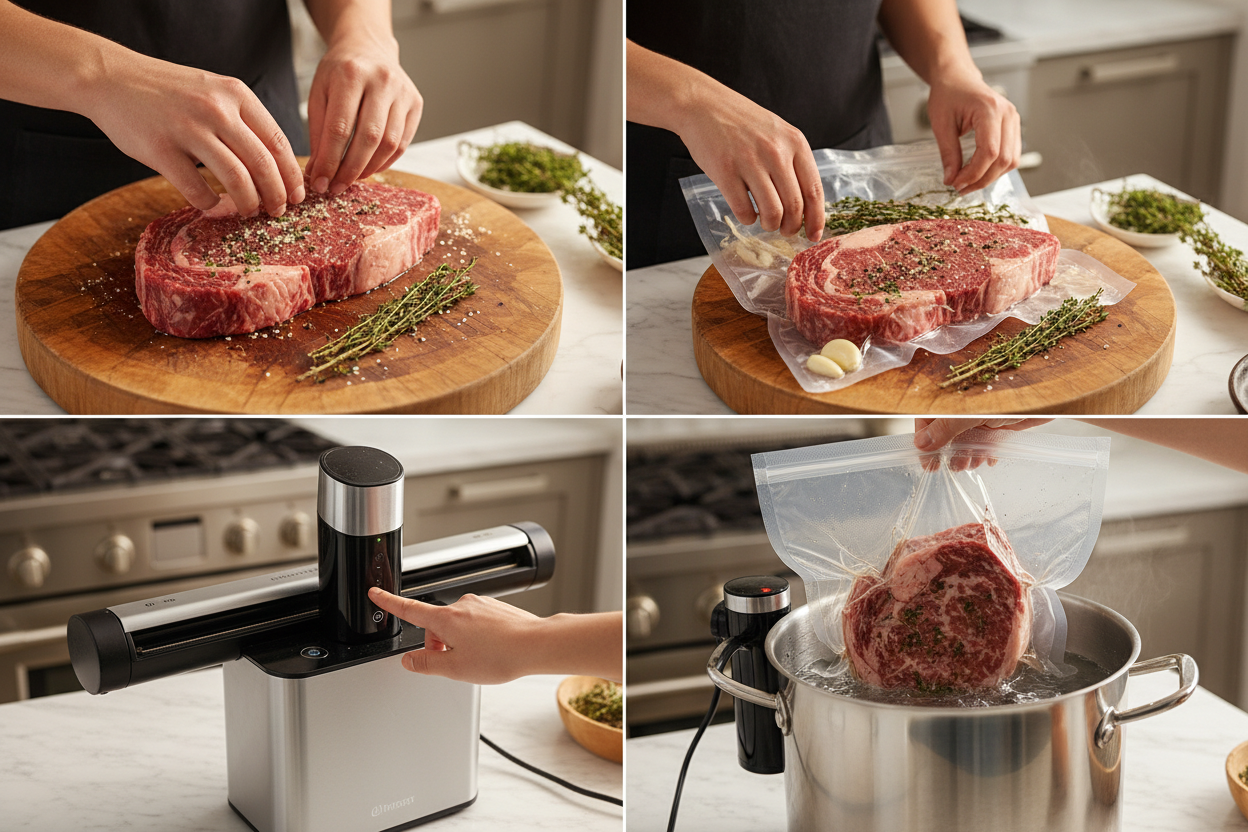
Step 1: Prepare Your Food
Season your ingredients before sealing.
Popular sous vide choices include:
- Steak with herbs
- Chicken with spices
- Salmon with lemon and seasoning
Avoid adding too much liquid before sealing because excess moisture can interfere with the sealing process.
Step 2: Place Food Into the Vacuum Bag
Choose high-quality sous vide vacuum seal bags designed for heat resistance.
Leave enough space at the top of the bag so the vacuum sealer can create a strong seal.
Step 3: Vacuum Seal the Bag
Place the open end into your vacuum sealer.
A good vacuum sealer should:
- Remove air efficiently
- Create a strong seal
- Handle different food types
For moist foods, using a machine with proper moisture control can improve sealing performance.
Step 4: Cook Using Sous Vide
Once sealed, place the bag into your temperature-controlled water bath.
The exact cooking temperature depends on the food and desired result.
Step 5: Store or Finish Cooking
After cooking, you can finish foods like steak with a quick sear for additional texture.
Common Mistakes When Vacuum Sealing for Sous Vide
Mistake 1: Overfilling the Bag
Too much food can prevent a proper seal.
Leave enough space around the opening.
Mistake 2: Using the Wrong Bags
Not all storage bags are designed for sous vide temperatures.
Use vacuum-compatible bags made for cooking applications.
Mistake 3: Sealing Wet Food Incorrectly
Liquid near the sealing area can weaken the seal.
For very moist foods, consider briefly chilling or partially freezing before sealing.
Mistake 4: Forgetting About Sharp Bones
Bones can puncture vacuum bags.
Protect sharp edges with proper preparation.
Expert Tips From Fresko
At Fresko, we believe food preparation should be simple, practical, and designed around real kitchen routines.
For the best sous vide results:
- Use strong vacuum pressure for better food contact
- Choose durable vacuum bags
- Leave enough sealing space
- Label prepared portions before storing
A reliable vacuum sealer is not only useful for sous vide cooking — it can also help organize freezer storage, reduce food waste, and simplify weekly meal preparation.
Recommended Tool: Fresko Vacuum Sealer
For home cooks who want better sous vide results, a vacuum sealer with strong suction, reliable sealing performance, and compatibility with different bag sizes can make the process easier.
The Fresko Vacuum Sealer is designed for everyday kitchen use, helping you:
- Prepare meals ahead of time
- Protect food quality
- Reduce freezer waste
- Create consistent sous vide results
Explore Fresko vacuum sealing solutions: Fresko Vacuum Sealer Collection
Frequently Asked Questions
1. Do you need to vacuum seal for sous vide?
No, vacuum sealing is not absolutely required, but it is recommended because it creates better contact between food and water while helping preserve flavor and texture.
2. Can I use regular freezer bags for sous vide?
Regular freezer bags are not always designed for sous vide cooking temperatures. Vacuum seal bags made for cooking are usually a better choice.
3. What is the best vacuum sealer for sous vide cooking?
The best vacuum sealer should provide strong suction, reliable sealing, and compatibility with sous vide bags.
4. Can you sous vide without vacuum sealing?
Yes. Some people use zipper bags with the water displacement method. However, vacuum sealing usually provides more consistent results.
5. Are vacuum sealed bags reusable?
Some thicker vacuum bags may be reusable depending on the food and cleaning process, but many cooking bags are designed for single use.
6. Can I vacuum seal meat before freezing for sous vide?
Yes. Many home cooks prepare and vacuum seal meat portions before freezing, then cook directly from frozen with adjusted cooking time.
7. Why is my sous vide bag floating?
Floating usually happens because air remains inside the bag. A stronger vacuum seal can help reduce this problem.
8. Can vacuum sealing improve meal prep?
Yes. Vacuum sealing makes portioning, freezing, and preparing meals ahead much easier.
Final Thoughts
A sous vide vacuum sealer is one of the simplest upgrades you can make if you enjoy precision cooking at home.
While sous vide can work without vacuum sealing, removing air from the bag helps improve consistency, preserve flavor, and create better cooking results.
Whether you’re preparing steak for the weekend, meal prepping chicken for the week, or storing seafood for later, the right vacuum sealer can make your kitchen routine easier.
Ready to improve your sous vide cooking experience?
Explore Fresko vacuum sealing solutions and bring restaurant-style preparation into your own kitchen.
Share:
Best Vacuum Sealers for Sous Vide Cooking (2026 Guide)
Vacuum Sealer Rolls vs. Pre-Cut Bags: Which Is Better?