

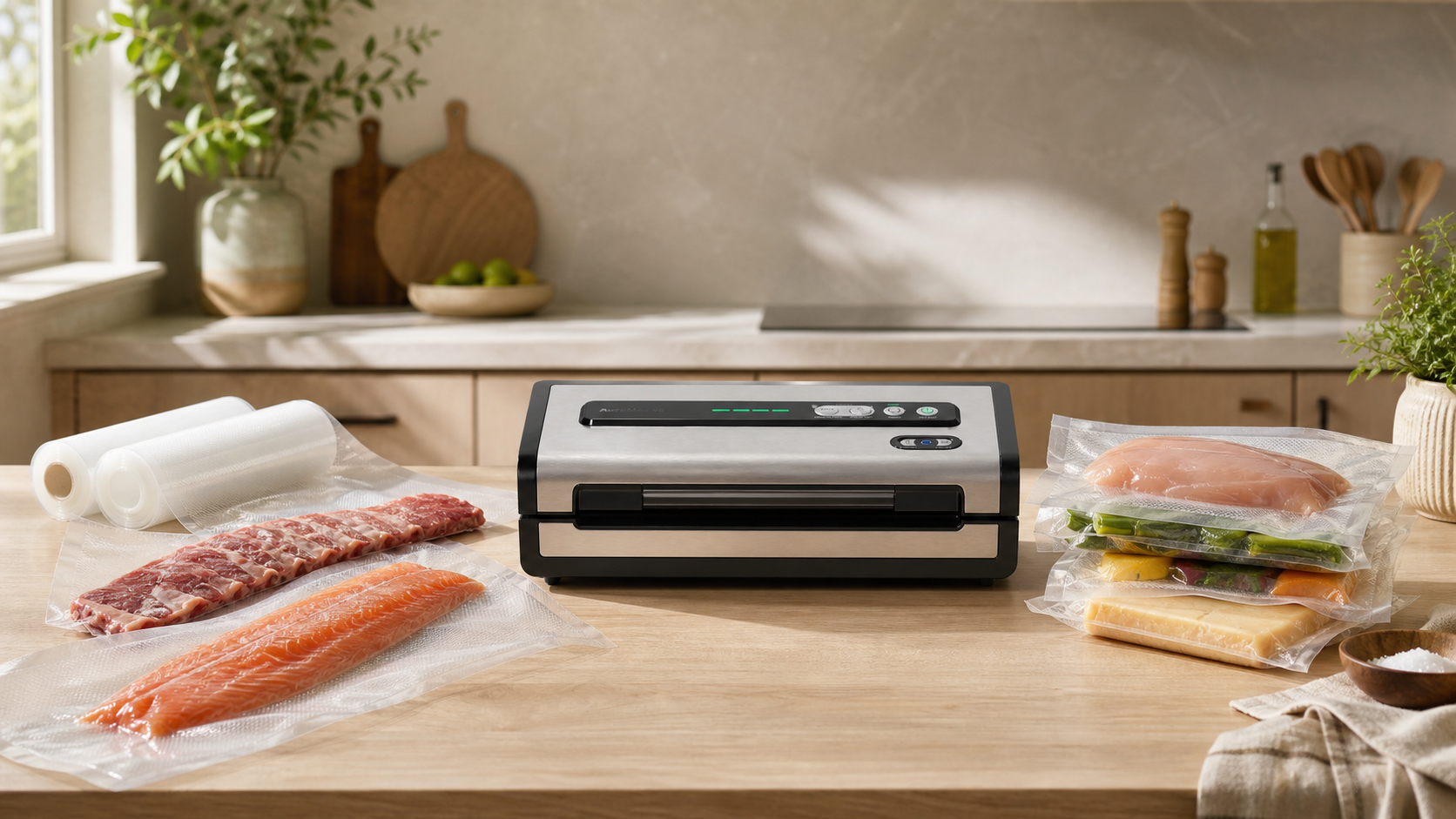
If you are comparing vacuum sealer rolls vs. pre-cut bags, the best choice comes down to one tradeoff: flexibility versus speed. Choose rolls for ribs, whole fish, bread loaves, and portions that change size. Choose pre-cut bags for weeknight meal prep and repeatable portions. For most home kitchens, the smartest setup is not either-or—it is a small supply of both.
Both formats can make excellent vacuum sealer bags for food. What changes is the work you do before sealing, how closely the bag fits the food, and how much material you use. Here is the practical comparison.
Quick Verdict: Rolls or Pre-Cut Bags?
- Choose vacuum sealer rolls if you regularly seal oversized, long, or odd-shaped foods and want to control bag length.
- Choose pre-cut vacuum sealer bags if you value speed, consistent portions, and one less seal per package.
- Choose both if you meal prep during the week but also buy meat in bulk, freeze seasonal produce, or cook sous vide.
| Factor | Vacuum Sealer Rolls | Pre-Cut Bags |
|---|---|---|
| Setup | Cut to length and seal one end first | Fill, vacuum, and seal |
| Speed | Slower for high-volume portioning | Fast and repeatable |
| Size flexibility | Excellent; custom length | Limited to the sizes you buy |
| Material use | Efficient when cut carefully | Efficient for foods that match the bag |
| Best for | Ribs, roasts, fish, bread, variable portions | Steaks, snacks, vegetables, meal prep |
| Long-term value | Best when food sizes vary | Best when convenience drives consistency |
What Are Vacuum Sealer Rolls?
A vacuum seal bag roll is a continuous tube of bag material. You cut the length you need, heat-seal one end to create a pouch, add food, then vacuum and seal the open end. Common widths such as 8 inches and 11 inches handle everything from individual portions to wider cuts.
The biggest advantage is custom length. Instead of folding a long salmon fillet or using a giant fixed bag for a small roast, you make a bag that fits. That can reduce empty space and material waste—provided you measure before cutting.
Pros of Vacuum Seal Rolls
- Custom length for long, bulky, or irregular foods
- Useful when portion sizes change from week to week
- Easy to keep two widths on hand without stocking many fixed sizes
- Helpful for bulk shopping, hunting, fishing, and large-batch cooking
Cons of Vacuum Seal Rolls
- You must cut the material and seal the bottom before filling
- Uneven cuts or too little headspace can cause failed seals
- They are not automatically cheaper if you routinely cut bags too long
What Are Pre-Cut Vacuum Sealer Bags?
Pre-cut vacuum sealer bags arrive sealed on three sides. Pick a size, add the food, place the open edge in the machine, and run the vacuum-and-seal cycle. That small reduction in effort matters when you are packaging 20 chicken breasts or assembling a month of freezer meals.
Pre-cut bags are also consistent. A stack of 6-by-10-inch bags makes snack and small portions predictable, while 8-by-12-inch bags suit many everyday proteins and meal-prep portions. If you are unsure which dimensions fit your food, use our vacuum sealer bag size guide.
Pros of Pre-Cut Bags
- Fastest setup: fill once and make one final seal
- Uniform packages stack neatly in a freezer
- Easy to track portions for meal prep
- Less chance of a crooked cut or weak bottom seal
Cons of Pre-Cut Bags
- A fixed bag can be too short for ribs or too long for a small portion
- Keeping several sizes on hand takes more storage space
- A poor size match can waste material even though prep is faster
Vacuum Sealer Rolls vs. Bags: The Differences That Matter
1. Convenience and Sealing Time
Pre-cut bags win on speed. Each pouch needs only the final vacuum seal, while a roll-made pouch needs a bottom seal plus the final seal. The difference is minor for two steaks but noticeable during a large meal-prep session.
Rolls trade time for control. If your sealer stores a roll and includes a cutter, the extra step becomes easier. If it does not, keep scissors and a flat measuring area nearby.
2. Cost and Material Waste
Do not assume a roll always costs less. Compare the price per usable package, not just the price per foot. Rolls save material when they prevent you from using an oversized bag. Pre-cut bags save time and reduce bad cuts. The most economical option is the one you can size and seal correctly without do-overs.
For either format, leave enough clean material above the food—usually about 3 to 4 inches—so the bag lies flat in the vacuum channel. More is not always better; excessive headspace uses extra material and gives the machine more air to remove.
3. Food Protection and Freezer Organization
Bag format does not determine protection by itself. Material quality, texture, a clean sealing edge, and a complete heat seal matter more. Properly sealed food vacuum sealer bags reduce air exposure, which helps limit oxidation and freezer burn.
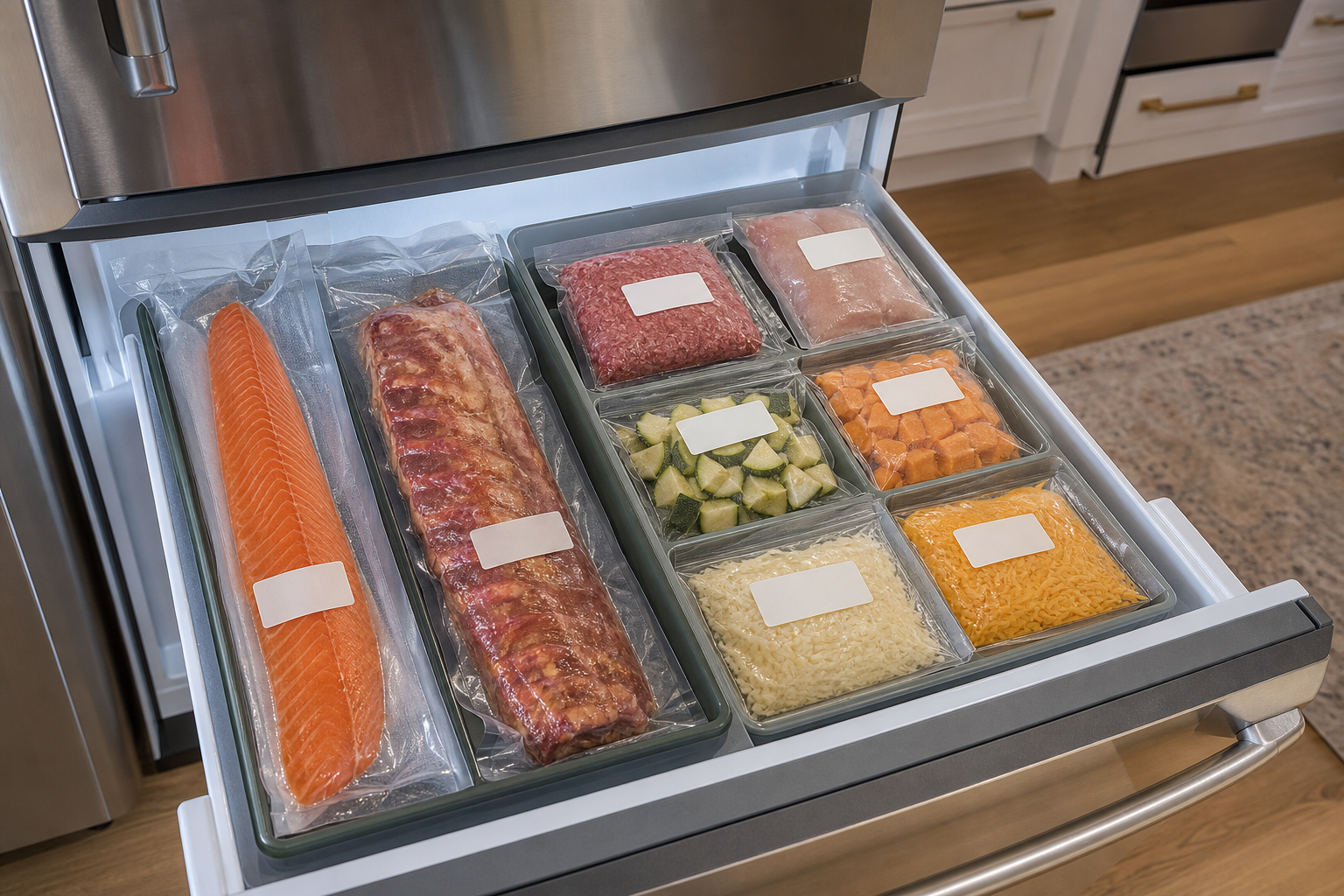
Pre-cut bags create tidy, uniform stacks. Rolls fit the food more closely, especially when a standard bag would leave a long empty tail. Both can organize a freezer well; they simply solve different shapes.
4. Machine Compatibility: Textured vs. Smooth Bags
This is the buying detail people miss most. Most home countertop machines are external suction sealers. They need textured vacuum sealer bags with embossed air channels so air can travel out of the package. Smooth chamber-vacuum pouches generally require a chamber machine.
Before buying any vacuum packaging bags for food, check your machine type, maximum sealing width, and the bag manufacturer’s temperature guidance. Fresko’s BPA-free textured vacuum sealer rolls come in 8-inch and 11-inch widths and are designed for standard external vacuum sealers. Fresko also offers ready-to-fill pre-cut bags in practical everyday sizes.
How to Use Vacuum Sealer Rolls Without Wasting Material
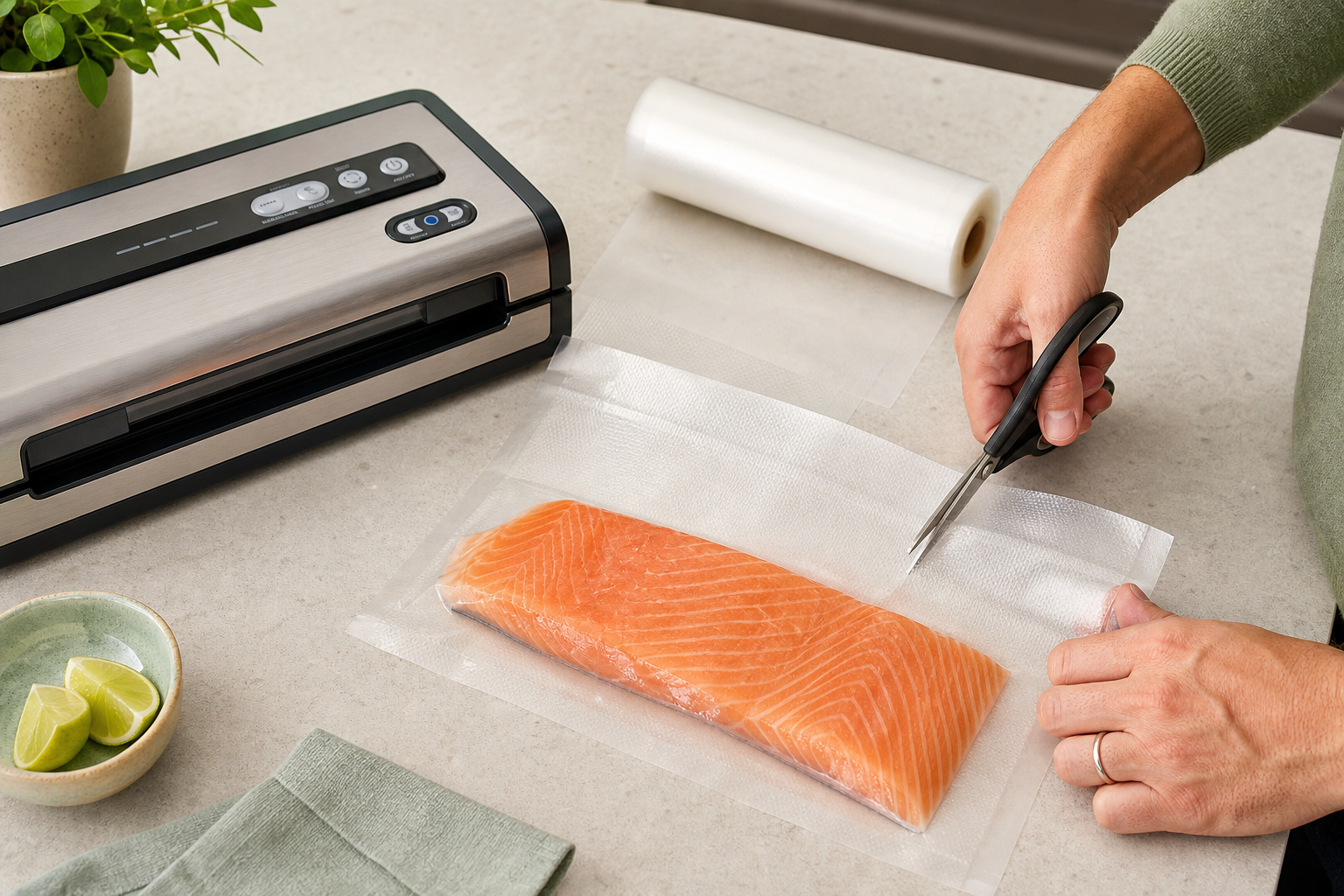
- Measure the food. Include its height, not just its length.
- Add 3 to 4 inches of headspace. Add a little more for thick or irregular foods.
- Cut squarely. A straight edge is easier to position on the heat strip.
- Seal one end. Check that the first seal runs continuously from edge to edge.
- Fill the pouch. Keep grease, crumbs, and moisture away from the sealing area.
- Vacuum and seal the open end. Let the machine finish its cycle before lifting the lid.
If you are new to the machine itself, follow our complete how to use a vacuum sealer guide.
Which Format Should You Choose?
| User Type | Best Choice | Why |
|---|---|---|
| Weekly meal preppers | Pre-cut bags | Faster, consistent portions |
| Bulk shoppers | Both | Pre-cuts for portions; rolls for large cuts |
| Anglers and hunters | Rolls | Variable, long, and irregular shapes |
| Small households | Pre-cut bags | Simple portions with minimal setup |
| Sous vide cooks | Both | Match the package to the food and cook |
Common Buying and Usage Mistakes
- Buying smooth bags for an external sealer. Choose embossed channel bags unless your machine manual says otherwise.
- Ignoring maximum seal width. An 11-inch roll will not work correctly on a narrower sealing bar.
- Cutting too close to the food. Without clean headspace, the bag may wrinkle or pull liquid into the seal.
- Using one size for everything. A two-width or mixed-format setup usually wastes less material.
- Treating vacuum sealing as shelf-stable preservation. Perishable food still needs prompt refrigeration at 40°F or below or freezing; follow the USDA’s cold-storage guidance.
FAQ
Are vacuum sealer rolls better than bags?
Rolls are better for custom lengths and unusual shapes. Pre-cut bags are better for speed and consistent portions. Seal quality can be equally strong when the material matches the machine and the edge is clean.
Do vacuum sealer rolls work with any vacuum sealer?
Not always. External suction machines usually need embossed or textured rolls. Chamber machines can use smooth chamber pouches. Also confirm the roll width fits your sealing bar.
Can you cut pre-cut vacuum sealer bags?
Yes, but trimming removes a factory-sealed edge and creates another sealing step. If you resize bags often, a roll is usually more convenient.
Can vacuum seal rolls be used for sous vide?
Yes—when the manufacturer marks the material as food-grade and safe for the planned cooking temperature and time. See our guide to vacuum sealing for sous vide for setup tips and alternatives.
What are the best vacuum sealer bags for most homes?
The best vacuum sealer bags are textured, food-grade bags that fit your machine and routine. A practical starter setup is pre-cut bags for daily portions plus 8-inch or 11-inch vacuum seal rolls for foods that do not fit.
The Bottom Line
Choose rolls when food should determine the package length. Choose pre-cut bags when you want the package ready before the food reaches the counter. If your kitchen does both meal prep and bulk storage, keep both formats: pre-cuts for the routine jobs and rolls for everything that refuses to fit neatly.
Explore Fresko vacuum sealer bags and rolls, or pair them with the Fresko AutoMax V8 for a flexible food-storage setup built for real-life portions.
Share:
How to Vacuum Seal Food for Sous Vide Cooking: A Complete Guide
Best Vacuum Sealer for Food in 2026: Tested Buying Guide