

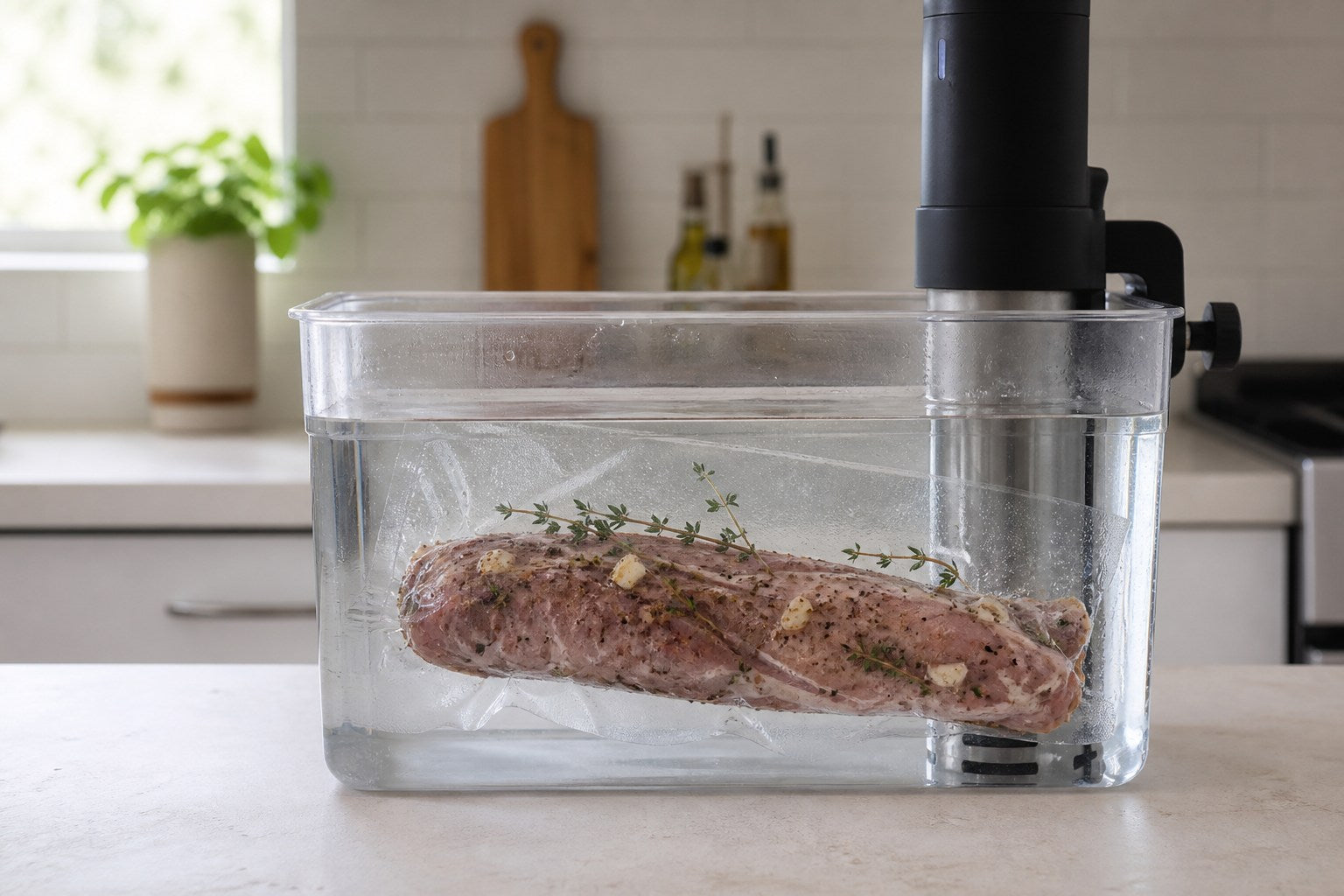
Pork tenderloin is lean, elegant, and notoriously easy to overcook. A few extra minutes in a hot oven can turn the tapered end dry before the thick center is ready. Sous vide removes that guesswork: the water bath brings the entire tenderloin to one controlled temperature, then a fast skillet sear builds the browned crust.
This sous vide pork tenderloin recipe is designed for a typical 1- to 1.5-pound tenderloin. Our go-to setting is 140°F (60°C) for about 2 hours, followed by a very hot, very short sear. The result is tender, evenly rosy pork with enough structure to slice cleanly.
Quick answer
Set the sous vide bath to 140°F (60°C). Trim and season a 1- to 1.5-pound pork tenderloin, vacuum seal it, and cook for 1½ to 3 hours depending on thickness; 2 hours suits most tenderloins. Remove it from the bag, dry it extremely well, and sear in a ripping-hot skillet for about 30 to 45 seconds per side.
Sous Vide Pork Tenderloin at a Glance
| Prep time | Sous vide time | Finish time | Yield |
|---|---|---|---|
| 15 minutes | 1½-3 hours | 5 minutes | 4 servings |
Ingredients
- 1 pork tenderloin, about 1 to 1½ pounds
- 1 teaspoon kosher salt, or to taste
- ½ teaspoon freshly ground black pepper
- 2 sprigs thyme or rosemary, optional
- 1 small garlic clove, lightly smashed, optional
- 1 tablespoon neutral high-heat oil
- 1 tablespoon unsalted butter, optional
Do not confuse pork tenderloin with pork loin. Tenderloin is the long, narrow muscle that usually weighs around a pound. Pork loin is much larger and needs a different time calculation.
Best Sous Vide Pork Tenderloin Temperature
Temperature controls doneness; time controls how long the center takes to heat and how the texture changes. We recommend 140°F for the broadest appeal: juicy with a light pink center, yet firmer than the very soft texture produced at 135°F.
| Bath temperature | Time window | Doneness | Texture |
|---|---|---|---|
| 135°F / 57°C | 2-3 hours | Medium-rare | Very juicy, soft, distinctly pink |
| 140°F / 60°C | 1½-3 hours | Medium | Juicy, tender, clean-slicing |
| 145°F / 63°C | 1½-3 hours | Medium | Lightly pink, firmer |
| 150°F / 66°C | 1½-3 hours | Medium-well | Fully firm, less juicy |
Food-safety note: The USDA's simple consumer guidance for whole pork is a minimum internal temperature of 145°F followed by a 3-minute rest. Lower-temperature sous vide cooking relies on holding food long enough for pasteurization, and the required time depends on thickness. Use a validated time-and-temperature method, keep the bath accurately controlled, and choose the USDA target for high-risk diners or whenever you are unsure.
How Long to Sous Vide Pork Tenderloin
Measure the thickest point, not the weight. At 140°F, use these practical windows for a thawed tenderloin:
| Maximum thickness | Suggested time at 140°F | Notes |
|---|---|---|
| About 1¼ inches | 1½ hours | Small or tapered tenderloin |
| 1½-2 inches | 2 hours | Most grocery-store tenderloins |
| 2-2½ inches | 2½-3 hours | Very thick center or two tied together |
| Frozen | Add 45-60 minutes | Bag before freezing; cook without thawing |
A longer bath will not raise the pork above the set temperature, but texture still changes. Keep tenderloin under about 4 hours so it remains springy rather than becoming overly soft.
How to Make Sous Vide Pork Tenderloin
1. Preheat the water bath
Set your immersion circulator to 140°F (60°C), or choose another temperature from the doneness table. Cover the container if your cooker recommends it and allow the bath to stabilize.
2. Trim the silver skin
Use a sharp knife to remove the shiny, tough membrane without carving away much meat. The thin tail cooks at the same bath temperature as the center, but you can fold it under and tie it for more even medallions.
3. Season simply
Pat the pork dry and season all over with salt and pepper. Add one or two herb sprigs and a lightly smashed garlic clove if you like. Sous vide concentrates aromatics, so restraint tastes better than packing the bag with raw garlic or a handful of woody herbs.
4. Vacuum seal the pork
Place the tenderloin in a single layer with the herbs. Leave at least 3 inches of clean bag above the meat, then vacuum and seal. A second seal is useful when the bag will be frozen or handled heavily. Fresko pre-cut vacuum bags are convenient for standard tenderloins; cut-to-size rolls fit unusually long pieces.

5. Cook until evenly heated
Lower the bag into the water and make sure it is completely submerged without blocking the circulator. Cook according to the thickness table. If a bag floats, trapped air is usually the cause; reseal it or use a rack or sous vide weight without covering the meat.
6. Dry it more than you think
Remove the pork from the bag and reserve the juices if you want a pan sauce. Discard the cooked herbs. Pat the meat very dry with paper towels, including the ends. Surface water must evaporate before browning can begin, and that extra time can overcook the outer layer.
7. Sear fast over high heat
Heat a cast-iron or stainless-steel skillet until very hot, then add the neutral oil. Sear the tenderloin for 30 to 45 seconds per side, rolling it until the exterior is browned, about 2 minutes total. Add butter and fresh herbs only near the end so they do not burn.

8. Slice and serve
Rest for 2 to 3 minutes while you finish the sauce, then cut into ¾- to 1-inch medallions. Spoon the sauce around rather than over every crusted surface.
Optional 3-Minute Pan Sauce
Lower the heat and pour excess fat from the skillet. Add ¼ cup unsalted stock or dry cider and scrape up the browned bits. If using reserved bag juices, bring them to a full simmer first and skim any coagulated proteins. Reduce briefly, whisk in a teaspoon of Dijon mustard and a tablespoon of cold butter, then taste before adding salt.
Vacuum-Sealing Tips for Better Sous Vide Pork
- Keep the tenderloin in one layer so water reaches every surface evenly.
- Do not pour a large amount of thin marinade into an external sealer bag; chill or freeze marinades first, or use Pulse.
- Wipe the bag opening clean before sealing.
- Use food-safe, heat-rated bags designed for sous vide.
- Do not use the unopened retail package unless the manufacturer explicitly says it is safe for sous vide temperatures.
New to bagging food for a water bath? Start with our vacuum-sealer guide for sous vide, then review the seven sealing mistakes that can ruin a cook.
Storage, Make-Ahead, and Reheating
Make ahead: After cooking, transfer the sealed bag directly to an ice bath for 10 to 15 minutes, then refrigerate promptly. Store cooked pork in the refrigerator for 3 to 4 days, consistent with USDA leftover guidance, or freeze for longer storage.
Reheat: Keep the pork sealed and warm it in a water bath at the original cooking temperature until heated through, usually 45 to 60 minutes depending on thickness, then dry and sear. For high-risk diners or a conservative leftover standard, follow USDA reheating guidance of 165°F; that higher target will produce firmer pork.
Cook from frozen: Season and seal the raw tenderloin before freezing. Add 45 to 60 minutes to the thickness-based cook time and confirm the bag remains fully submerged.
Common Mistakes
- Buying pork loin instead: Check the label and shape before using tenderloin timing.
- Skipping the silver skin: It stays chewy even after a long bath.
- Overloading the bag with herbs: Long contact intensifies strong flavors.
- Letting the bag float: Exposed meat will not heat evenly.
- Searing damp pork: The surface steams and the outer meat overcooks before browning.
- Searing too long: Use high heat and turn frequently; the center is already cooked.
Frequently Asked Questions
What is the best temperature for sous vide pork tenderloin?
140°F (60°C) is our preferred balance of juiciness, tenderness, and a clean-slicing texture. Choose 145°F for a firmer result and alignment with the USDA's simple whole-pork target.
How long should I sous vide pork tenderloin?
Cook most 1½- to 2-inch-thick tenderloins for about 2 hours at 140°F. Use 1½ hours for thin pieces and up to 3 hours for very thick ones.
Can I sous vide frozen pork tenderloin?
Yes. Vacuum seal it before freezing and add approximately 45 to 60 minutes to the normal cook time.
Do I need to vacuum seal pork for sous vide?
A vacuum sealer gives the most consistent contact and storage-ready package. For a short cook, a sturdy freezer bag and careful water-displacement method can also work.
Can I put butter in the sous vide bag?
You can, but it is not necessary. Butter is more useful during the final sear or in a pan sauce, where its flavor stays on the surface.
Why is my sous vide pork tenderloin gray?
The unseared surface naturally looks pale after the water bath. Dry it thoroughly and sear over very high heat to create a brown crust.
Should pork tenderloin be pink?
Color alone does not determine safety. Proper temperature, sufficient time, handling, and an accurate thermometer matter. Pork cooked at 140°F sous vide will usually remain pinker than conventionally roasted pork.
How long is cooked pork tenderloin good in the refrigerator?
Refrigerate promptly and use within 3 to 4 days under USDA leftover guidance.
Juicy Pork, Without the Timing Anxiety
Sous vide is especially good at protecting lean cuts. Set the temperature for the texture you want, use thickness to choose the time, and save your attention for the final sear. At 140°F for around 2 hours, pork tenderloin becomes an easy weeknight main that still looks at home at a dinner party.
Build your sous vide prep station: browse Fresko vacuum sealers and heat-rated vacuum bags for dependable, fully submerged cooks.
Share:
How to Use an Immersion Blender Without Splatter
Immersion Blender vs Blender: Which One Fits Your Kitchen?